December 2, 2025
Breitbart–The Fed’s Impact with John Carney

Class Description
Will Interest Rates be Coming Down?
What has the Fed done to us? Why is Jerome Powell an abject failure and what does it mean for you?
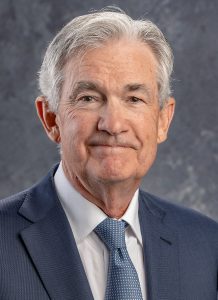
Jerome Powell, Federal Reserve Chairman
Breitbart Finance and Economics Editor John Carney is an expert in explaining in plain terms how high-level decisions in Washington affect your pocketbook. What about Fed Governor, Lisa Cook? Tonight, we’ll discuss the Fed, its actions it has taken in the past several years during the Biden and Trump administrations, how this has impacted our economy, and what may come next. It is kitchen table economics at its finest.
Speaker Bio
John Carney is the Finance and Economics Editor at Breitbart News, where he also co-authors Breitbart’s free daily business newsletter, the Breitbart Business Digest.
Carney’s expertise in finance stems from his work as a corporate lawyer, structuring financing for mergers and acquisitions. In 2006 he assumed the helm of a new blog about Wall Street — Deal Breaker. From there he went to Business Insider; then to CNBC, where he started NetNet online editorial geared for Wall Street professionals. In 2013 he went to the Wall Street Journal where, among other things, he wrote for the famous “Heard on the Street” column.
His work also has appeared in The New York Times, New York magazine, Fortune magazine, the New York Post, the New York Sun, the Daily News, the New York Observer, Scooter magazine, The Atlantic, the Daily Beast, and the American Conservative.
Breitbart’s John Carney: The Fed’s Impact
Host: [00:00:00] Hi, Mike Mercy. I’d like to welcome you back to Empower You. Um, this Tuesday night, our guests will be John Carney, who’s the, uh, finance and economics editor at Breitbart. And, uh, John will be giving a, a talk about the Fed. So he’ll be talking about what’s, what’s going on with the Fed recent dynamics in the past few years, including the Biden administration, um, how things look for the future.
And, um, we’ll be of as usual taking questions from the audience. So, um, please, if you have any questions, um, on any aspect of the Fed you’d like to ask him, you can do that throughout the discussion on the chat and, um, we’ll try to get to those questions as we go. Um, but, but we might have to put some questions off to the end.
So I’ll be introducing John formally in a moment. Now I would like to move on and, uh, formally introduce John Carney.
So John, as I mentioned, he’s the finance and economics editor at Breitbart. He’s also a co-author with, uh, [00:01:00] Breitbart’s Business Digest, which is a daily business newsletter that’s free. Um, he has deep experience in in corporate finance and financial journalism. So he started off as a corporate lawyer. He was structuring the financing of mergers and acquisitions and then, uh, I think it was about 2006, he broke into financial journalism with a new blog called About Wall Street.
And from there he went to a. A number of brand name financial, uh, news, uh, organizations, including Business Insider, CNBC, uh, the Wall Street Journal. He actually was a, an author on the, the famous Hurt on the street column. Um, and also his, his work, his articles have appeared in the New York Times, New York Magazine, fortune, New York Post, the Sun, New York, sun Observer, the Atlantic, the Daily Beast, and the American Conservative.
So, John, I, I’d like to welcome you to Empower You.
Speaker 2: Thanks for having me. Uh, [00:02:00] what a great, uh, program you guys have. Just listening to all the big man. I wanna sign up the Sebastian Younger, the, the Scotch tasting. This is great, great
Host: stuff. Yeah. We, we have a broad spectrum of topics that we cover. We do a lot of politics, you know, a lot of, uh, uh.
Political and social issues, but we do other things too. So, but what, you know, we’re really thrilled we have a relationship with Breitbart and, and we usually have two or three people from Breitbart join us and we really appreciate it. And, uh, I listened to your interview with Brian Thomas this morning.
And, um, I’m excited about this. ’cause I think it’s, it’s, uh, you know, given the, all the inflation we’re experiencing, it’ll be, everyone has an interest in knowing what the Fed might do. Um, so I’ve, I’ve made it clear to the audience that they can submit questions at any time and if they’re appropriate at that moment, we’ll get to them.
If not, we’ll hold ’em off. Great. And, uh, so just feel free. Um, sure. We can hear you talk.
Speaker 2: So why don’t we start in the near term and then maybe I’ll, I’ll, I’ll broaden [00:03:00] out the talk a little bit to talk about what’s happened over the last couple years. Uh, the Federal Reserve is having a meeting next week, uh, where they will decide whether or not to raise interest rates again, and there’s been actually a lot of volatility about the market’s opinion about whether or not they will cut interest rates.
Sorry, I said raise a moment ago whether they will cut interest rates at this December meeting. They cut in September, which was the first time they cut this year, they cut again in October. And in the October meeting, Jerome Powell, the Fed chairman, made it very clear that it wasn’t certain what they were going to do, and the market had more or less baked in that they were going to cut in December.
And so when Jerome Powell said. Well, it’s not clear what we’re going to do in December. The market immediately took that to mean, okay, we’re not gonna cut in [00:04:00] December. Why would he be saying it’s not clear if, uh, if they were gonna cut or even if there’s a possibility. It seemed to be trying to talk the market out of that.
That actually may have been an overreaction. Uh, he may really have been. We don’t know what we’re gonna do. Um, that’s one of the problems of being the fed chair, is people listen to every word you say. I’ve often remarked that it’s a little bit like people used to be kremlinologists back when we had a Soviet Union and people would pay attention to, like, who got to stand next to Stalin?
Right? Like, that was how you knew who was on the ops, you know, and eventually their picture would di you know, they’d disappear from the pictures. They wouldn’t be seen at all. But, you know, people pay so close attention to what every word the Federal Reserve Chairman says. Um, in, in part because he does have almost totalitarian power over our money [00:05:00] supply.
Um, not complete totalitarian power, and we’ll talk about that as we go on. But there’s not a lot of organizations in our government where somebody has the power to do what the Federal Reserve has the power to do, which is basically to set interest rates and control the money supply. Uh, they’re subject to two very broad.
It’s really three, but people call it a dual mandate mandates that were set by Congress in the 1970s. Uh, and those are before that. By the way. It was not exactly clear what the Fed’s mission was. The Fed was established. It was to provide, um, some, uh, stability to the banking system, but exactly what their public purpose was.
In the 1970s, Congress said, okay, we’re gonna make, we’re gonna make this clear. We’re gonna say you have to maximize employment [00:06:00] in a, uh, keep interest rates reasonable and create the conditions of price stability, which means low inflation. But those are very broad mandates and nobody really quite knows what they mean.
The Federal Reserve more recently, in the last 20 years, has made it clear that they think price stability means 2% inflation. So it doesn’t mean no inflation, it means 2%, but again, that’s not written in stone anywhere. Um, it, it’s actually barely written down at all. The Federal Reserve has said that’s what their target is.
They have a statutory obligation to do price stability, and they say, we think 2% is consistent with our, our, our obligation to do price stability. So Jerome Powell, you know, again, he has a lot of power. As Fed Chairman, he hinted that he might not raise interest rates. The market immediately started to [00:07:00] discount the idea that they were going to cut, or sorry, might not cut interest rates, discount, the idea that they were gonna cut interest rates in December.
So more recently, over the last week or so, uh, a couple people who are considered pretty close to Jerome Powell, the head of the New York Federal Reserve Bank, uh, John Williams and the head of the San Francisco Federal Reserve Bank, Mary Daley both indicated that they think maybe the Fed should cut in December.
This was in contrast to a bunch of presidents and I’ll just before try. Describe the difference between that Fed president there. There’s regional fed banks all over the country. There’s an Atlanta Fed, a Boston Fed, a Philadelphia Fed, a New York Fed, a Kansas City Fed, um, and San Francisco, fed Dallas fed these and they are, uh, elected more or less by the local business communities.
Um, and then, [00:08:00] uh, and that’s how they get to be the head president of the Fed. And then there are Fed governors. The Fed governors are appointed by the president. Uh, they are confirmed by the Senate and they serve very long term, 14 year terms, which is incredible. I mean, it’s almost a, a lifetime tenure.
They are the Supreme Court of monetary policy, is the way I’d put it. So, uh, you had all these Fed presidents say, we think maybe we won’t raise interest rates. Then you have these two very important Fed governors, San Francisco and New York. We won’t cut interest rates. They said we think we might cut interest rates.
That was interpreted as the Fed, um, saying as, as basically Jerome Powell saying, okay, we’re probably going to cut. Um, because if these very. Important and also considered close to Powell, uh, president Fed Governors are indicating that they’re going [00:09:00] to cut, then probably they are going to cut. And if Powell wanted to, he could have reigned them in.
He could have said, guys, don’t go out there and say that the market will, pricing cuts are coming. The market, uh, right now there’s a thing called the, uh, fed Funds Futures market, where you can more or less literally bet on whether the Fed is gonna cut and that is predicting an 89% chance of a fed cut next week.
So if the, and the Fed doesn’t like to surprise markets very much so if the Fed was not going to cut, we would’ve had Jerome Powell or somebody else say over the last couple days. We are not going to cut next week. They go into a quiet period. They call it a blackout period. Um, maybe you guys will have your blackout period after your scotch tasting.
But the, uh, but the blackout period is where no Fed people could speak. It’s a, you know, right before a meeting, a week before a meeting, basically they [00:10:00] silence everybody. Say, don’t talk anymore. Okay? We’re like, we want everybody to wait for the meeting to find out what’s gonna happen. So the last two days everybody was watching, will there be some sort of pushback?
The market is pricing, more or less, a 90% chance of a cut at the meeting next week. If the Fed isn’t planning on cutting, if Jerome Powell doesn’t think they’re gonna cut, if John Williams, the head of the New York Fed, doesn’t think they’re gonna cut it, Mary Daley doesn’t think they’re gonna cut, we’re gonna hear from them, but we didn’t.
So that’s how you get the idea that yes, they’re definitely going to cut next week. The question then becomes. What happens after that? Um, the most likely outcome, I think, is that the Fed meets in January, then they meet again in March, and then they meet again in April, and then they meet again after Dr.
And Jerome Powell’s, [00:11:00] uh, term ends at the end of May. I don’t think they’re going to cut at all after December, I think that will be Jerome Powell’s final cut. He will then wait, um, in part to show his independence. He really is, has ended up as this, you know, in a almost psychological battle with Donald Trump, where Donald Trump has been pushing him.
Um, my friend Larry Kudlow likes to describe this as working the reps, right? Like Donald Trump keep, you know, it’s like a, a coach who keeps, you know, criticizing the refs calls. He hoping that you’ll influence them a little bit. So Donald Trump’s been working the refs. Jerome Powell is the ref who wants to show, he’s not gonna be influenced by that.
So I think he doesn’t cut the market, thinks there’s like a, a 50% or so chance that they cut in Jerome Powell’s [00:12:00] final FOMC meeting in April. Um, so that’s possible. Uh, I think there, I think the market is wrong. Sometimes that happens. Uh, the, and you know, the market changes its mind all the time. So you can’t assume in these search circumstances that like.
The Fed Fund’s futures market is correctly predicting what’s gonna happen. Two weeks ago, the Fed fund’s future market said there’s not gonna be a cut in December. Today they say it’s gonna be at 90%. So, you know, when you’re a few months out, you can’t assume the market has it, right. They’re just going on the information they have.
So the, so what’s been going on between, uh, so Powell and Trump have been fighting the basic year or so, um, has mostly been about tariffs. Jerome Powell has said that he would be cutting rates. If not for tariffs because he believes tariffs are inflationary. [00:13:00] Uh, he, why so why would he be cutting rates?
Well, one, because inflation has come down a lot. We had inflation up at 9% worse in 40 years. It’s come down to around between 2.5 and 3%, and it seems to be on its way to 2%. The other prob the other, the other factor that, that, again, remember the Fed has this, what they call a dual mandate employment on the one hand and inflation on the other.
The other factor that the Fed, uh, considers when they’re talking about this is, um, is the employment situation. And hiring that ha has slowed down a lot. What’s interesting is there, there’s a couple interesting things about that. One, we actually don’t know very well what’s happened in the last couple months.
We got a September employment report late. We have, we’re never [00:14:00] getting the October employment report. We would normally get the November employment report this Friday, and we’re not going to get it because of the government shutdown. It, uh, delayed the collection of data. It’s delaying the processing of the data.
So we’re gonna get the November data, but not for a couple weeks actually. So it’s normally out the first Friday of every month. I think it’s scheduled to come out maybe December 16th, if I have that right. Anyway, it’s delayed quite a bit. So the Fed is actually kind of flying blind right now. They don’t have a lot of the data they would normally have.
They don’t have all the inflation data they would normally have. They don’t have the jobs data they would normally have. Over the past year, it’s been pretty clear that businesses are hiring at a lot slower pace than they, than they had been. What makes that interesting is there’s a both a push pull factor in that [00:15:00] one.
The, uh, there are less workers available to the Federal Reserve. Um, Donald Trump, uh, has been deporting workers. A lot of workers have actually self deported. The border has closed. So instead of letting a hundred thousand people in every month, more or less, no, no additional people other than, you know, the people who actually are giving visas are coming in.
So the growth of the number of people you can employ has shrunk, which of course means that the number of people you’re adding to payrolls is going to contract as well. But that’s not necessarily a bad thing for the people who they’ve in the United States, yes, jobs aren’t growing as fast, but. The best estimates say, actually right now, we probably only need around 30 to 40,000 jobs each month in order to not have the unemployment rate rise in order, in other words, to keep everybody more or [00:16:00] less employed as they are now.
And the unemployment rate is quite low. It’s, uh, anytime you’re below 5% unemployment, the economy is doing well. There’s always, you, you, you don’t actually wanna ever get to zero. Just to make this clear, you don’t ever actually wanna get to 0% unemployment because that’s an economy that’s not moving at all.
Right? Uh, my, my, my daughter’s joked about this at one point when the housing, I think it was right after COVID and there was, uh, very low unemployment and very few home sales. And one of my daughters, she was like 10 years old at the time, said, Hey, maybe we finally got it right. Everybody got the right house.
Everybody got the right job and we don’t need to do anything right? But obviously that’s not really the way the economy works. That’s nobody has the right house, you know, for their, their whole lives. Some of us buy a house, we think we’ll live here our whole lives, but then after 15 years, you know, your kids grow up, they go away to college and you think, oh, you know, maybe I wanna [00:17:00] don’t want live here.
Um, move somewhere warmer or smaller or cheaper. Um, and the same thing with your jobs. Pe you, you want there to be, uh, a dynamic job market in which some people are not working and some people are and they get a new, you know, they move to a new job. They’re willing to quit a job that doesn’t fit them anymore.
Dynamic job market is not 0% unemployment above 5% is probably a troubled job market. So you want there to be somewhere, you know, call it between. Probably healthy is somewhere between three and 5.5 is a healthy job market. Um, much lower than that. You probably, it’s a, and same thing with inflation. You don’t really, I, it would be nice, I know people would like it if there was 0% inflation, but if there’s 0% inflation, uh, you actually then run into the problem of if something goes wrong in the economy, prices start falling.
And that means anybody who [00:18:00] stocked their shelves and paid a price six months earlier to buy the merchandise ends up losing money. The good thing about a 2% inflation, that might be too high. Maybe it should be 1%. But the good thing about having some inflation is you can stock your shelves. Not worry that the stuff is going bad in terms of price right away, right?
If, if you have deflation, if prices are always falling, then you better sell everything you have right away on your, on your store shelves because it’s gonna sell for cheaper in the future. That’s not good for business and it makes businesses hold back. So I get asked a lot, like, why do, why do we want any inflation?
That’s the reason, um, because it’s can be punishing not to have any inflation. So, Jerome Powell looked at the housing market and, or sorry, the, the housing market is part of it, but looked at the labor market and said, I think hiring’s been pretty weak. Uh, I’ve seen a small uptick in [00:19:00] unemployment. I would be cutting rates if I, if not for tariffs, but I’m convinced tariffs are inflationary.
Uh, and so therefore I’m, I’m holding back on cutting rates. I think this was an epic, colossal mistake. Uh, we have not seen. Tariff inflation. In fact, businesses are saying all the time that what they are seeing is that they can’t pass. They are paying some of the tariffs, uh, importers, Walmart, target, uh, companies that sell a lot of imported goods.
Say we we’re paying some of the tariffs. Our suppliers are paying some of the tariffs in terms by lowering their price, but we are not actually able to pass through our costs onto, uh, our customers. I think one of the reasons, frankly. Is because people are so tired of inflation that [00:20:00] they, that when, when the business says to them, you know, oh, you know, we’re gonna raise our price a little PE people are like, okay, I’m gonna go shop at your competitor.
So again, like people say, well, why would Walmart absorb the cost? And let me explain why that is. ’cause this is a question I get a lot. Walmart’s a big company. Why wouldn’t they just pass on the increased cost of tariff onto their customers? Well, because they have competitors. They have Costco and they have Target.
And if they try to pass on the cost, if they say, you know, we’re doing, we, we, we got hit with a 20% tar on imports, we’re raising our co, our prices by 5%, guess what happens the next week? Target takes out an advertisement in every local newspaper in America saying, we’ve cut our prices by 2%, Walmart’s up by 5%, come shop with us.
So they are in the, the American competitive economy is actually causing [00:21:00] Jerome Powell’s thesis to be wrong. John,
Host: could I, yeah. Can I ask you a question about that? Why, why is Jerome paling? I think tariffs are, I mean, what, isn’t there data on this? Or can, can you look at the last, you know, whatever, 6, 7, 8 months after Trump imposed tariffs and see whether it’s been inflationary?
Yeah. Why, why is he saying, I think in the abstract,
Speaker 2: right? Well, that it’s super, actually really sort of makes me a little crazy because you would think that after, you know, Trump announced, first of all, Trump got elected and he said he was gonna raise tariffs. Right? So you’d think. Uh, maybe prices would start to go up.
Trump did his big tariff announcement on April 2nd. You’d think prices would start to go up, uh, and they, and you don’t see it. So the fed’s theory is that this is just building up in the system that these companies will eventually pass these through. The problem with [00:22:00] that is it’s an unfalsifiable theory, right?
They can, they can say that forever. Uh, it can be a justification for holding back on cutting interest rates. ’cause you say, well, we, the longer prices don’t go up, we’re, they’re so certain that prices will go up. The longer they don’t go up, the more they think that there’s an inflationary pressure building up in the system.
So they think it’s like, you know, your boiler rattling in the basement. It’s not providing any heat to the house, but you can hear it going and you’re like, uhoh, you know something? Something’s gonna blow. That’s what they’re worried about. Uh, I think they should be more evidence-based. I think they should say, um, okay, we were wrong about this.
It’s very hard to do though, if you have like dictatorial powers over the monetary policy to like actually admit you’re wrong. Especially when you were just wrong about inflation the last time. Right? They got it wrong under Biden. They said, we wouldn’t have a big inflationary problem. [00:23:00] Inflation would be transitory.
It would go away. It’s not gonna become a big problem. So this time maybe they erred on the side of caution, like, okay, let’s try to, and I’m being very generous to them right now. Um, let’s ignore that. Like, pretend they’re not political at all. And they said, well, we got inflation wrong last time and let’s, let’s make sure we, we don’t underestimate inflation this time.
Uh, but they have, but they made the opposite error. In other words, sometimes people say like. Generals are always fighting The last war, the Fed was so, got inflation so wrong when it went up a lot. This time they got it wrong because it wasn’t going up a lot. And I think that is a, it’s, they should admit, uh, that it’s not going to go up.
And in fact, very recently there was a paper of academic paper produced by the San Francisco Fed, a couple of researchers there that looked at [00:24:00] 150 years of tariffs. And what they found was, in fact, tariffs don’t rise prices at all. They actually tend to lower them. Uh, they act, the, the, the, the pressure from tariffs actually goes the opposite way.
Uh, which is that it tends to actually raise unemployment a little bit and lower prices. Now, exactly why that happens. The paper actually isn’t sure about, and it’s a relatively new finding. I have my theories about why it’s happened. They have their theories, but nobody’s really sure yet. So I don’t wanna pretend like we know the answer.
But the Jerome Powell definitely has not come to grips with that yet. And in fact, he said a number of times, like everybody I talk to says, uh, tariffs are gonna push prices up. So that tells you Jerome Powell doesn’t call me. Because I could have told him tariffs are not going to push prices up. In general, just to back up a little, when you [00:25:00] raise taxes on a thing, it doesn’t raise the price on a thing necessarily.
It lowers the profits of the person who is doing it because they raising the cost of something doesn’t mean that somebody has more money to spend on that thing. And particularly if you’re talking about the entire economy, it’s very hard to have inflation unless the Federal Reserve and the and the federal government are working together to grow the money supply tariffs don’t grow the money supply.
So it’s very hard to have inflation caused by tariffs. You, maybe you could get a, a, a momentary blip, but not really that. I mean, even that I, I think is unlikely to happen. In fact, what we’re likely to see is tariffs, uh, may raise prices of some imports. And I, and I spent a just, I spent all of the first Trump administration tracking what happened to prices and very little thing, [00:26:00] very few things went up in price, uh, in including things we were importing from China, including steel and aluminum, things made of steel and aluminum.
Now things went up in price, farther out on the production, you know, so steel went up in price when you put a tart steel, but the products made of steel didn’t. Same thing is happening here where you’re not seeing a lot of pass through to consumers in terms of price. Where you do see pass through.
Arguably we saw some in furniture, we import, we now, America used to be the furniture maker, capital of the world. We were amazing at it. We let China more or less underprice that business and destroy it. Now, if you buy made in America furniture, you are wealthy because you, it is very hard to track. You are buying it from somebody who is, or you know, or you have a friend who knows how to do it.
But it is very hard to buy made in America [00:27:00] furniture for the average American today. And that is because we lost a lot of our domestic furniture manufacturing. So when we put tariffs on, furniture went up in price. But that is more than offset by other things that went down in price. So you don’t actually see inflation, which is.
The general price level rising, right? It’s not necessarily everything rising, but most things rising. Instead, what you saw is something that happens all the time in the economy, which is the prices of some things go up and the prices of other things go down. That’s normal because when you, when you don’t, inflation is when everything rises more or less together.
And to, for that to happen, you have to have an increase in the money available for people to purchase things. You can’t have inflation without that. Uh, so, uh, so drone Powell’s been wrong. Um, he will cont. Unfortunately, I do not believe he will be ever persuaded [00:28:00] he was wrong, so I believe he will be, continue to be wrong until he is no longer fed Chairman in, uh, so what, you know, in a few months.
Uh, so he is, his term ends, uh, Donald Trump will get to appoint his successor, um, but that also has some complications and I guess I’ll talk about that a little. Um, Donald Trump’s uh, gets to appoint your own Powell’s successor as Fed Chairman. However, he can only select a Fed governor to replace Jerome Powell normally.
And that’s something people don’t realize. He can’t appoint just anybody. That person has to be a Fed governor now. For all of the Fed’s history, except for once in the 1940s and fifties, [00:29:00] um, every Fed chairman, who is also a Fed governor, stepped down from their governor’s seat when their chairmanship ended.
So in other words, when the president said, I’m gonna appoint somebody else, or the Fed chairman said, I’m done with being the Fed chairman, they didn’t stay on the board of the Federal Reserve. They didn’t stay on the Board of Governors. They stepped down. Jerome Powell has refused repeatedly, explicitly to say he will step down from his governor’s seat, which lasts for two more years.
Once his chairmanship, which lasts just until May, is up, that would be unprecedented. Frankly, I think reckless and irresponsible for him to do that because he would be badly undermining whoever comes next as chairman, right? He would not, he would be in a, I’ve called him, uh, [00:30:00] a shadow chairman, or actually I called him the shadow king.
He would sit there sort of passing judgment over the chairman’s, uh, decisions. He would be influencing the people who have been on the Fed with him for years rather than the new chairman coming in and getting to set the agenda. Um, but Powell hasn’t said he’ll step down. So, uh, there’s only one seat that’s definitely going to be open, uh, coming up.
This is the seat that was, uh, abandoned by. Adriana Kler, who we didn’t understand at the time, but she stepped down early. Her term went through January 31st. She stepped down this summer and it wasn’t clear why we now know that she was under investigation for possible, uh, I don’t wanna call it illegal trading, but [00:31:00] trading, trading that violated the fed’s, uh, rules.
And so she stepped down because of that. Her seat was filled by Steven Myron, who is the, uh, chairman of the Council of Economic Advisors, which is a sort of an academic advisory board to the White House. Um, Steven Myron has been serving as the, he served in two meetings so far. He may be able to serve in December.
Uh, his term though, his seat, because he is filling out the, the, the, the end of Kugler’s seat that ends at the end of January, so that whoever trump names to the, to my, the seat currently occupied by Myron is most likely the person who Trump is going to name as Fed chairman because they have to be a, a Fed governor.
Host: Um, so you’re [00:32:00] saying Trump is gonna appoint the person and then immediately make them fed Chairman? Yeah. Well,
Speaker 2: I mean, so that’s happened before. So, so Powell already was a Fed governor, so he didn’t have to be appointed governor and then, then promoted to chairman. But, but Bernanke was not a Fed governor.
He was named governor and um, chairman all at once. But the point is there has to be an open seat. There has to be an open governor’s seat. So we have the Myron seat, which will open up and Trump could appoint the next Fed Chairman to that. Uh, we also have Lisa Cook, who Trump ha, who’s a Fed governor, who Trump has said he’s trying to remove.
That’s before the Supreme Court. That seat could also open up or it might not, depending on the what, how the Fed rules. And so what we’ll have then is possibly two seats. One question though is does Jerome Powell stay? I think if he doesn’t like [00:33:00] who Trump appoints, he may stay. Um, he may try to become a kind of resistance shadow king of the Federal Reserve.
Uh, I think that’s really dangerous. And I, you know, Jerome Powell, if you’re watching in Power America, you should be, you know, but if you are tonight. You should step away, don’t do this thing that you’re tempted to do. It would be very bad for the country, for the Fed, uh, and for you and your long-term reputation, step away.
Host: I I just, I just have a question about that. So do you feel that that Powell, is it simply that he wants power or do you think, let me ask it this way, you’ve, you’ve talked about this issue of fed independence, right? Right. Does the Fed operate independently there? Are they, are they serving on the orders of like the administration or not?
Right. Right. So couldn’t, couldn’t the Fed be independent but biased? In other words, they’re not a puppet of the administration, but they’re [00:34:00] biased toward or against the administration they work for or against them.
Speaker 2: Yeah. No, I think that’s absolutely a brilliant question because I think that’s exactly what we saw.
I think the Fed was biased in favor of Biden’s policies, which is why inflation got outta control. And I think they are biased against Trump’s policies, which is why they have not been doing their, their, their work. I
Host: Is that why you think Powell might try to stay because of a bias? Yeah. I don’t think
Speaker 2: Powell is personally power bad in like the sense of like an evil cartoon villain in that like, he doesn’t wanna give up power.
I think actually what’s happening with Powell is more of a traditional historical villain. And let me, let me explain what I mean by that. Usually when people do great evil, not always, some people are just plain evil. But usually when people do great evil, it’s not because they personally want power, it’s because they have, [00:35:00] uh.
Adopted an idea that the only way to save the Republic is by empowering themselves. And I think Jerome Powell really does believe that he, that he, he needs to save the Federal Reserve, maybe save the economy from Donald Trump, and that there is a strong, uh, inclination that creates a strong inclination for him to not give up his seat and stay in power.
However, I do think it might depend on who Trump appoints and what that person says to Powell, right? Like maybe that per, you know, whoever Trump appoints can persuade Powell to say, all right, this is a reasonable pick. I am not going to undermine this, and I’m gonna step down. So if Powell steps down, Trump gets to replace Powell’s governorship, he gets to appoint the new chairman.
He gets to a point, whoever is Steven, I would, I mean, [00:36:00] look, if Steven Myron’s been a great pet governor, if I were Trump, I’d be very tempted to reappoint him for, for another 14 year term. Uh, and then he might be able to appoint the replacement to Lisa Cook. So Trump has a lot of appointments he could make that would be influential on the Fed.
I mean, I, I think our treasury secretary, Scott Besson, has been fantastic as treasury secretary. But if I were Trump, I would also think about appointing him. If not to chairmanship, I would appoint him as chair, consider appointing him as chairman. But also to one of the, those longer term fed governorships, because they are so long lasting.
This will be a legacy of Trump’s, just like the Supreme Court appointments are a legacy of Trump’s that will last much longer than his administration. These are people who he will appoint, who will be there from years and years on. So you wanna make sure that you’re appointing the best people you can come up with.
And [00:37:00] fortunately for Trump, I think he has, you know, there’s a full bullpen for him to select.
Host: Wow.
Speaker 2: So, uh, I think, I mean, so I’ve been talking for pretty long. If there’re, if there are questions, I’m happy to answer any.
Host: Okay. We have a question, excuse me from Dan. He asks, he has several questions here. First of all, do you think the Fed has way too much power to influence our supposedly free market economy?
Speaker 2: I do, I worry that, um, it’s really hard to, when I explain to people in detail what the Fed does and how much influence it has, um, it’s hard. It, it’s, it’s hard to reconcile that with the concept of a free market economy. Uh, un unfortunately, I’m not sure that there’s a lot of better systems out there. In other words, [00:38:00] you, you, we, we went through a period of like free banking where there was basically in American history where there’s basically no centralized control of banking, but that had tons of bank failures and the economy was very volatile during that period.
Um, I think maybe if what we really need and this, and this isn’t something I know how to make a rule for, it’s a more restrained federal reserve. One that says, you know, we’re going to try to set our sights on how the economy develops over the next 20 years rather than over tomorrow. I think that would be a, you know, rather than over the next year, like the fact that the Fed is constantly the fact that the Fed is bothered by the fact that we missed an unemployment report, right?
Or that like another unemployment report might come late. That’s too much recency bias towards me. I would much rather have a fed that says, you know what? [00:39:00] We’re gonna look at what we think the trends of the economy are over the next 10 years and make policy based on that, not make policy based on, you know, last month’s, uh, employment report.
I think that’s not a, i, I don’t think that’s been a good system. Uh, the Fed hasn’t been doing it this way for very long, and I think they could adopt a. Uh, a, a less, um, less, they call it data dependent. I would like them to be data dependent, but more on a long-term basis. I also think, uh, a thing that Jerome Powell began that was a mistake, uh, is doing what I call the standing press conference.
Um, when, so 20 years ago, fed Chairman didn’t even hold press conferences. People that had no idea what they were doing, people used to have to guess what they, 30 years ago, people had to guess what monetary policy was. Is the Fed, is the [00:40:00] Fed being loosening monetary policy or they tightening people didn’t, weren’t even sure, uh, the Paul Volcker, Alan Greenspan would come before Congress and they would just like tell riddles and not say what they were doing.
Um, Bernanke, uh, Janet Yellen did press conferences, but they did them sitting down behind the desk in a very academic way as if they were explaining to a class or you were having office hours with them. Uh, Powell’s innovation, I think, actually politicized the Fed in a, in an unwanted way. His innovation was to stand at a podium like a politician, like a president, frankly.
Say what he was doing. That I think both invites criticism from political actors, but also makes the fed in some ways too prominent in our lives. I liked it better when they were behind the desk. I’m not sure I’d go [00:41:00] back to the riddling of Volcker. Maybe though, maybe that was better or the, the, the riddling of Alan Greenspan.
Maybe that was better. I don’t like, I think the next Fed chairman should, at the very least, sit down during his press conferences.
Host: Well, oh, excuse me. Just one second here. Okay, so Dan continues. Why do they, why does the Fed own so many bonds? They’re not short term it seems like. Well, it seems like they often do more harm than good.
Speaker 2: Yeah. So what happened was the Fed only so the Fed the interest rate. The Fed directly controls. Is an overnight lending rate between banks. It’s, it’s called the Fed funds rate. And so if a, if a bank needs to borrow reserves from another bank overnight, uh, the Fed, the, the, the Fed targets an interest rate for what the bank can borrow at that rate.
[00:42:00] Banks actually don’t borrow reserves from each other anymore because of the Fed actually expand. There’s so many reserves in the banking system, they don’t need to do that. So now the Fed controls the short term interest rate through something called the interest on reserves. And this is, again, a very short term rate where they pay banks an interest rate on reserves.
But when the Fed lowered interest rates all the way to zero, either after the financial crisis or during COVID, they had a problem. They couldn’t lower, they couldn’t get the longer term rates to fall more. So they bought a ton of the longer term bonds in order to try to push to, to lower the supply of those, which would then lower the interest rates on them.
And that worked a bit. Uh, it, it seemed to have lowered the interest rates on the long end, but it meant that the Fed had developed this enormous balance sheet that when they started to raise rates again, they actually lost a lot of money because they had [00:43:00] bought all these bonds that were now underpriced in terms of the market.
So, uh, interestingly enough, the last like two or three weeks, I think the Fed has actually stopped losing money. Um, they, they were losing money, uh, week after week. They’ve stopped losing money recently. Um, but they’re, they, when the Fed makes money, by the way, that lowers the, the government deficit ’cause they pay their, their, their profits to the US Treasury.
Uh, they’re probably not going to do that again until 2029 because they lost so much money that they’re, they’re gonna stay sort of unprofitable. They’re not gonna make back their losses for another four or five years.
Host: Wow. Excuse me. So we have, we have several more questions here. Um, um. Better fed solutions in other countries that we might adopt, or so are he, they’re asking are there [00:44:00] any better fed solutions in other countries that we might adopt?
Speaker 2: A lot of other countries have, um, don’t have the dual mandate. In fact, we’re the only ones that have both, uh, the, um, maximize employment and control inflation. Um, a lot of other countries have the single mandate, central bank, which is control of inflation. However, it’s not clear that they obey the single mandate.
They actually seem to operate as if they have a dual mandate, which is to, you know, basically keep the economy growing, keep unemployment from rising too much. So I’m not really sure anybody has it figured out yet. Uh, and I’m not sure that the formal rules you put in place only do this one thing. Really constrain what the Central Bank does anyway, so I don’t know if there’s anybody else we can necessarily learn from.
It may be one of these things that we just over time, [00:45:00] you know, need to work on in reform, as you know, as we figure out, oh yeah, you know, we, for, we got very complacent. I’d say we had low inflation for 40 years, and so that seemed like, oh, the Fed’s really good at its job. But the problem with that is the very first time inflation started to creep up, the Fed got it totally raw, right?
Like the first time they were challenged, they got it totally wrong. And so my feeling on that is like maybe, um, maybe the Fed wasn’t that good over those 40 years. Maybe they were just lucky we didn’t have a lot of inflation. When it finally came around, they got it totally wrong.
Host: Another question. Excuse me.
Um, by what overriding metrics can we, I identify a successful fed, successful fed term?
Speaker 2: [00:46:00] Sorry, my, you guys can probably hear my dog barking.
Host: That’s all right. Um, do you want me to read that again or
Speaker 2: No? No. I, I heard it. Yeah. So I would say that what you really wanna know, a, a successful fed term is a couple things.
One, did they control inflation? That’s the number one thing I would want. You know, like, measure the mass. Did they control inflation? Number two, uh, did, uh. This is something I think the Fed has a little less influence over, but like, you know, did unemployment get out of control? I, and then the Fed has a couple other things that they do now that’s not baked into their thing.
It’s bank supervision. Um, fed failed dramatically at bank supervision in the years up to 2008, but they actually didn’t have that much power either. We gave the fed weirdly enough, more power after the financial crisis to regulate banks. So I would also say that, you know, um, have, you know, has the financial system [00:47:00] been safe and secure?
Uh, so those are the, those are the three measures I would look at. You know, how has inflation been, how has unemployment been and how has the, uh, how like is the financial system holding up? Okay. I would actually give, by the way, I would give Jerome Powell relatively good marks. We had. A momentary flash of a crisis when Silicon Valley Bank failed.
And there was a moment there where we worried will this spread? Will there be contagion? Will people start withdrawing their money from local banks all over the country and putting them in the giant banks, which we know are too big to fail. And that’s kind of a problem with our system right now is, you know, like whenever there’s a crisis, people pull their money outta the small banks and put them in JP Morgan Chase, right?
Um, we avoided that from happening. So I give the fed some [00:48:00] credit. They, I, while it was not ideal that they bailed out like large depositors of the, of Silicon Valley Bank, it did stop a systemic problem from happening.
Host: Excuse me. Okay, we have another one. Um, could you take a moment to enumerate the types of major actions a Fed can take?
Speaker 2: Sure. I mean, so, so the main thing the Fed does at every FOMC meeting is raise their lower interest rates. Those are their, it is a very binary choice, right? Like raise or lower interest rates.
However, inside of that, there, there’s a couple things hiding. One, as I was saying earlier, the, the fed funds rate, which is the main rate we all talk about all the time, doesn’t matter that much at all anymore. It’s really the interest on reserves, but they move that with the fed’s funds rate. [00:49:00] So the interest on reserves is what they pay banks for their, their, how much reserves they have in the system so that that rate, if that rate goes high, banks are less likely to lend money out.
Because that transfers when, when somebody borrows money from a bank and then moves it to another bank, the reserves flow to the other bank. So if a bank can make a lot of money by just holding reserves and not lending them, not lending money to somebody, then uh, they’re less likely to lend money. And so that’s actually why the economy moves more slowly when interest rates go up, because banks want to make sure they’re not depleted of the reserves by lending cash that then gets deposited at other bank and goes into the reserves there.
So to, so that’s the number one thing. The other thing is the Fed, that the Fed does [00:50:00] is. And it’s now a normal part. They used to call it like extraordinary, but it’s now a normal part of what the Fed does, which is buy bonds. The Fed used to have almost no balance sheet at ever. They had like a half a trillion dollars of, of assets.
Now they have 6 trillion and they’ve decided that they’re not going any lower than them. They’re gonna start buying, building it up again. So the Fed, uh, so that’s the, that’s the, the, the second or third I guess thing the Fed can do, which is, uh, buy assets or sell assets. Um, and right now, uh, they have been not selling assets, but letting them run off as they, uh, as bonds mature and they’re about to stop that they’ve, they’ve stopped it and they’re probably gonna start accumulating more assets again.
Host: What. What are your thoughts on our, I’m just curious about our level of debt. You know, I, I assume the Fed [00:51:00] can decide that it’s outta control and they’re not gonna allow us to, you know, put more money into the economy, right. To, to,
Speaker 2: yeah. So I mean the, one of the big, so like two big things the Fed policy does is affect our mortgage rates, right?
Because our mortgage rates work off of where tenure treasuries are, but also affect the price of government borrowing because when they influence what you can get, uh, what interest rates are available in the private sector, that creates a competition for government borrowing. And when you can, when you can buy a mortgage backed security, uh, for seven or 8%.
You’re not gonna buy a government bond for 4%, you’re going to require a higher, uh, interest rate on it. So when the Fed raises interest rates, it raises the price of government debt. Uh, and the problem with that though is we [00:52:00] have so much debt now that it actually doesn’t work to discourage borrowing because we’re at a stage where we now borrow to pay off our borrowing, right?
We are a chronic borrower where our deficit now, a large percentage of our deficit, a large percentage of federal spending, which means a large percentage of our deficit now goes to pay interest on the money we borrowed already. So when the Fed raises interest rates, instead of making us borrow less, which it should, we actually end up borrowing more because our debt’s more expensive.
And so we’re, we’re, it, it, it has a perverse signal where we’ve borrowed so much that we actually end up. Raising interest rates and that raises the deficit. That’s the, that’s a side that you borrowed too much money.
Host: But, but what I’m wondering is, doesn’t the Fed have a sense of responsibility for
Speaker 2: Yes and no.
They, what they, they actually say they do have a sense of responsibility in that [00:53:00] they, they are supposed to control inflation. And if they think that the deficit is high enough that it’s going to be inflationary, they will raise interest rates. The two problems with that one, they, they do try to not interfere with the spending and borrowing decisions of Congress, right?
They try to say like, we just, we’re going to make policy accepting whatever Congress does and not interfere with it. We’re not gonna try to teach Congress not to do irresponsible things. Um, and so that’s part of it. The other problem is. There is a bit of this problem when you raise the, when, when the debt level gets high enough, and then the Fed increases interest rates in an attempt to like make government more ex borrowing more expensive to discourage government from borrowing at a certain level, [00:54:00] the Fed is actually raising money that the federal government is paying into the private sector.
And it could, and this is controversial, it could actually become inflationary.
Host: Yeah.
Speaker 2: To that the government is paying so much in interest into the economy that that becomes its own stimulus and could become inflationary.
Host: Wow. Um, this, I I, I remember on your, your interview this morning with Brian Thomas, um, you, you talked about the, the COVID debt.
Right. The, the, the, uh, COVID. Bailouts and then, uh, I just wanted to clarify this, the, that level of debt we, what do we do in extra two to 3 trillion?
Speaker 2: Yeah.
Host: For COVID. I mean,
Speaker 2: yeah, it, it, it was a leap up. Um, that, that, frankly, I, I wrote a bunch of articles, um, in 2020 saying, we should not worry about debt at all.
We should borrow as much as we possibly [00:55:00] can. That the reason why we have built up the full faith and credit of the American people where we can borrow cheaply. Nobody worries that, that they’re gonna not get paid back is for a moment of crisis like this where we have shut down businesses. We told people this, not go outside, right?
Like we put the economy on hold. So it made sense to borrow a lot. What didn’t make sense was that we didn’t stop. Right? And this is always the problem, right? You when, once you get a government program running. It takes a lot to dial it back and we didn’t stop. And that’s what why we got the out of control inflation.
Host: But, but so, so we, we increased our budget by the two and a half to 3 trillion that, that year. Yes. What, 2020 or 2021. Okay. But, but my understanding is then Biden just sort of institutionalized that as our annual budget. Right. The, our usual, what was [00:56:00] it, four to 5 trillion before that Right? Went up to six to
Speaker 2: seven.
Yes.
Host: Yeah. So, so h how if, if that increase in 2.2 0.5 trillion in the subsequent years wasn’t spent on COVID bailouts, what do, what did we spend that two point 0.5 trillion on?
Speaker 2: Right. Well, so part of it was the, they, the, the Biden administration. Uh, like a good analogy is, you know, the people who just never stopped wearing masks, right?
Like they, they, they just kept it going. Uh, the Biden administration wanted to do that with the economy, right? So they just wanted to assume that there was a permanent crisis that permanently needed more and more ever more government spending. So they spent like crazy on a zillion different things. Um, whether it was, uh, you know, the, the, they had the, when you look at through their, their various plans.
Now, fortunately, some of them they didn’t get to do because some [00:57:00] smart Democrats, including Joe Manchin in, in West Virginia, told them no. Right? Like, okay, you’ve gone too far. You need to dial this back. But they were going for the whole thing. They would’ve been up at 10 trillion if we had, if they had gotten their way and.
So like, ha, almost half of American GDP would’ve been being spent by the US government at that point. Uh, they really went, uh, they, they, they, they thought that the economy could just absorb it all. They were wrong. We, and then when in, and then sadly when inflation did start to rock it up, they looked at everybody else besides themselves.
I remember it was like, oh, it’s supply chain problems. Okay, fine. But then those went away and inflation kept rising. It was Putin’s price hikes. Remember that one? It was Putin. So you know, you walk into a grocery store and you’re like, hamburger went up just twice as [00:58:00] much as it used to be. Did Putin eat all the beef?
Right? Like how could that possibly be a Putin price hike? Things that were just totally made in America went up in price. And you’re like, I don’t think Putin did that. Uh, I did like when people started to put like stickers around America that said, like, I did that and was picture of Joe Biden.
Host: That was right.
The ga The gas station. Yeah, the gas station. Gas pumps.
Speaker 2: And look, uh, I think we would’ve had a little bit of inflation coming outta COVID. Um, because we did have this enormous government spending and we had interest rates very low. I think we would’ve had some inflation. We would’ve gotten up to like four or 5%.
I think the reason why we got up to where we did the worst inflation in 40 years. Because Biden wouldn’t stop. Uh, and, and frankly, I don’t think that, like, I think we all are very lucky that they, that Donald Trump was reelected. I think if we, if Biden or Kamala Harris [00:59:00] had been reelected, they would’ve saw this as, um, an affirmation of what they had done, reengaged in the massive spending that they had planned and been thwarted at in their first term, second term, especially if it had been Biden, so that you’re not even going to be able to run again.
I think we would’ve seen inflation go even higher. So in a sense, the American people, by electing Donald Trump, rescued us from much worse inflation than I think was coming under Biden. Oh,
Host: I wanted to ask you, uh, I had mentioned this before we came on. Um, so I wanted to ask you this question about the, our annual budget includes about a trillion dollars to service the debt, right?
That we have. That’s right. Our 38 trillion in debt now. And, and I was wondering if, if that’s just sort of, sort of now in the background, you know, barring a trillion dollars to pay off [01:00:00] interest in principle on the debt. Um, I, is that sort of just like a low grade of continuous in source of a low grade of continuous inflation that builds up over time?
Yeah,
Speaker 2: no, unfortunately I think it is. Um, and it means that, uh, it constrains what we could do in terms of cutting taxes. ’cause we need to be able to pay off our, our debt, um, and we need to be able to make those payments. It constrains what we can do in terms of spending, because the next crisis we get into.
You know, a war, a pandemic, something where we wanna increase spending again, we’ll be dealing with paying that interest. Uh, and that’s really difficult. Um, it’s a reason why, you know, like in a, in a perfectly rational government, when things go wrong, you’d spend more, and then when things get better, you dramatically cut the amount of spending.
We didn’t do that. And so instead [01:01:00] we, we ended up with a much higher debt burden than we should. And it wasn’t just Joe Biden, by the way. We, there’s been a lot of periods over the last 40 years in which we probably should have cut government spending a lot because the economy was doing just fine.
Instead, we kept it at a very high level. And, uh, and as a society, I think we, it like the longer you keep all of these spending institutions in place. The harder it becomes to cut. We just, we we’re seeing this right now, frankly, with the Obamacare subsidies, right? The Obamacare is broken. It cannot pay its own bills.
The, the, the medical insurance, the health insurance that it provides is way too expensive for anybody in America to afford. And so we end up with these subsidies to fix the Obamacare thing. You try to pull away the subsidies and people are like, oh, I can’t afford that now. Yeah, because Obamacare broke it.[01:02:00]
That’s a good metaphor for almost everything that’s happened in our government for 40 years where we break things, we replace them with government funding. You know, whether it’s, whether it’s your local towns like community, you don’t have a community anymore. They, you know, they got rid of that. So now you have to build, uh, you know, you, you need government spending to keep people out of trouble.
Keep young people outta trouble, to keep old people from being alone. You just, everything gets replaced with government spending and the debt just keeps growing.
Host: Well, of course, I’m thinking back to the, the bush too. Yes. Um, he, I remember as a younger person who didn’t understand a lot about economics, there were just basic things that were intuitive to me.
Like, okay, so Bush, you know, starting the two wars, creating TSA and DHS and then cutting taxes, clearly we’re gonna have to, you know, increase our debt. So he doubled the debt from five to 10
Speaker 2: and Medicare, Medicare Part D, where he put prescription drugs onto Medicare as well, which was [01:03:00] another big spending thing.
And he really grew the Department of Education as well. So,
Host: oh, did he? Oh, yeah, yeah, yeah. Wow. But then, so then Obama, I remember Obama ran as an antidote to that. He said, you know, that’s irresponsible. We’re gonna, so he, he said, I’m gonna cut our debt. And then he doubled it from 10 to 20. Yeah. And then in 2016, Bush ran on, I’m, I’m sorry.
Trump ran on decreasing our debt, and then he increased it. I, at, at some point, I think at a lower pace. Right. But
Speaker 2: yeah, it grows, it grew more slowly. It’s growing more slowly again. Is
Host: it,
Speaker 2: is
Host: it, wow.
Speaker 2: It is helped, but like I said, the a huge problem is once you build the spending institutions trying to cut them.
Is really hard, you know, like there is like almost there, you know, the vampires and government agencies are the only two things that are immortal and one of those doesn’t really exist,
Host: Lord. So I’m just wondering, we only have a [01:04:00] couple minutes left, but what, what is your sort of prognosis on the level of debt?
I mean, it’s my, what I was trying to say here is that clearly, you know, then Biden increased the debt and now Trump’s increasing it at a slower rate. Right? But what’s your prognosis on, on the debt? I mean, if it’s, it seems like no one, everyone promises to cut it, they don’t cut it. Congress is irresponsible.
What do you think’s gonna happen? So
Speaker 2: I’m, I’m actually, I’m, I have a pretty, I think we can grow our way out of the debt. What we need to do is grow the economy at around 3% a year and grow the debt less than 3%. Then it, it take, you know, so in other words, you have two lines, right? They’re going up. But if, and right now we’ve had debt going up this way and the economy going this way, what we wanna do is switch the angles so the economy grows faster than the debt and then you can start to pay it down.
So the key is faster economic growth. And I think the key to that is shared prosperity in America. And I think the key to that is basically the Donald Trump economic program, which is [01:05:00] tariffs low, uh, tariffs, somewhat cuts to government spending, cut taxes to encourage business growth and, uh, lower immigration so that the American people who are here, uh, are able to be as prosperous as possible.
I think that’s how you pay off the debt. So
Host: you, you really, you feel like, you know, Trump really is laying the groundwork for
Speaker 2: that. I am. And I’ll just tell a very personal story, but the bio you told is a little incomplete. I actually, you know, my life didn’t begin as a corporate lawyer, obviously. Uh, I was a political activist, uh, in the 1990s.
I worked for Pat Buchanan’s presidential campaign in 1992. I was, I was very young. Uh, in 1996, I was still pretty young. In 2000, I was a law student and I, I did some help there and I left politics. After 2000, I became a corporate lawyer. I thought that we were done, you know, [01:06:00] America had made the wrong choice.
We’d given into, you know, we had allowed China to ae to the, uh, to the WTO as you were pointing out like our, our debt just kept growing. Our, uh, our government kept growing George Bush engaged in these insane wars. I just thought, you know what? I’m gonna take a job and, um, be, you know, be a corporate lawyer.
Then I started writing about finance a couple years before the financial crisis. ’cause I could see that the financial sector that I had gone to work for, instead of doing politics, was also going off the rails, and that went off the rails. And so I was pretty despondent. Uh, I left politics. I thought the financial sector was permanently broken, and then Donald Trump came around and this is the most hopeful I have been.
In 30 years. And so I just wanna leave everybody with that. I think we are [01:07:00] finally on the right path. If I were to write a book about this era, it would be called, it would be called The Fall and Rise of the United States, and we’re on the rise.
Host: Wow. Well, that, that’s comforting. Well, glad,
Speaker 2: glad to pr You know, I wanna end on an up note, so.
Host: Yeah, no, I, I appreciate John, thanks so much. This was really, it was great. Uh, we really appreciate it. We really enjoyed, thank
Speaker 2: you so much for having me. I, I, I hope we get to do this again.
Host: Yeah. Uh,
Speaker 2: may, maybe when we get a new Fed chairman, you guys could have me on. We could. Yeah.
Host: That’d be great. Yes.
Speaker 2: Awesome.
Host: Thanks so much. Um, to our audience, I just wanna remind you that, uh, on Thursday you can live stream the T-P-U-S-A, uh, meeting if you’d like to, and, uh, go out and empower you. We’ll see you soon.