December 9, 2025
In My Time of Dying with Sebastian Junger
Class Description
Sebastian Junger’s Reflection on Death and What Might Follow…
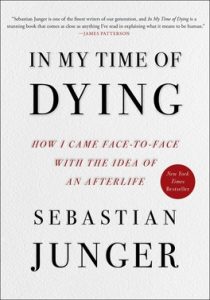
Sebastian Junger, author of the blockbuster, The Perfect Storm, will discuss his latest book, In My Time of Dying: How I Came Face to Face with the Idea of an Afterlife. This book is Mr. Junger’s powerful reflection on death — and what might follow — inspired by his near-fatal health emergency.
In the summer of 2020, Mr. Junger became crippled by abdominal pain and was rushed to the hospital by ambulance. Once there, he began slipping away. As blackness encroached, he was visited by his dead father, inviting Mr. Junger to join him. “It’s okay,” his father said. “There’s nothing to be scared of. I’ll take care of you.” That was the last thing he remembered until he came to the next day when he was told he had suffered a ruptured aneurysm that he should not have survived.
This experience spurred Junger—a confirmed atheist—to undertake a scientific, philosophical, and deeply personal examination of mortality and what happens after we die. In My Time of Dying is part drama, part autobiography, and part scientific inquiry into the mystery of death. We’ll take audience questions.
Speaker Bio
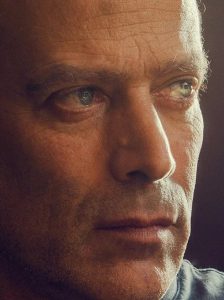
Sebastian Junger is the author of numerous books, including the following: The Perfect Storm; Fire; A Death in Belmont; War; Tribe; and Freedom. As an award-winning journalist, a contributing editor to Vanity Fair, and a special correspondent at ABC News, he has covered major international news stories around the world, and has received both a National Magazine Award and a Peabody Award. He is also a documentary filmmaker whose debut film “Restrepo,” was nominated for an Academy Award and won the Grand Jury Prize at Sundance. Junger has also written for magazines, including The New York Times Magazine, National Geographic Adventure, and Outside.
Sebastian Junger | In My Time of Dying
[00:00:00]
Host: Welcome to Empower You. My name is Mike Mercer and tonight’s guest will be Sebastian Younger. He’s, uh, as I’m sure you know, an acclaimed author, journalist, and documentary filmmaker. And we’ll be discussing his most recent book, which is titled, in My Time of Dying, how I came Face to Face with the idea of an Afterlife.
I wanna be thorough in my introduction because he’s so accomplished and he is done such, uh, interesting things. First of all, I wanna mention that he grew up in Belmont, Massachusetts, so a suburb of Boston. He attended Concord Acab Academy in Concord, mass and then attended Wesleyan University in Connecticut.
And, and while he was there, he majored in cultural anthropology and, um, he was actually an, an accomplished long distance runner. So he spent a summer, um, with the Navajo Nation, um, training to do long distance running because they’re supposed to be superb runners. And [00:01:00] he ended up writing his thesis on Navajo long distance runners.
So it was just a really, uh, fascinating aspect of his, uh, his early life as a student. Um, he’s the author of numerous books, so, which include the Perfect Storm Fire, a Death in Belmont War Tribe and Freedom. He’s an award-winning journalist. He, he’s published in, um, the New York Times National Geographic Adventure Outside Magazine, vanity Fair.
He was a, uh, at one point, a special correspondent for a BC News. He’s won awards. He’s won the National Magazine Award and the Peabody Award, and he’s also an accomplished documentary filmmaker. He, he, I think, at least four documentaries in his first documentary, he was a war, a war, uh, journalist correspondent.
And his first documentary was called Repo. And it was, um, while he was, uh, reporting from Afghanistan, and that was nominated for an Academy Award and, uh, it, it won the Grand Jury [00:02:00] prize at Sundance. So, um, I’d like to welcome you Sebastian. Thank you very much for joining us tonight.
Sebastian Junger: Uh, my, my pleasure. It’s very nice
Host: to be here. Thank you. Yeah. Um. I, so you wrote, you know, you wrote, we’re gonna talk about your, your latest book in My Time of Dying, but I, I wanted to, um, open up here with just two questions about the perfect Storm and one of the questions I, I think I’ve mentioned to you in one of our emails that I grew up in Dan, Massachusetts, which is only 10 minutes from Gloucester, where that storm Yeah.
You know, the Andrea Gale left from Gloucester, so I, I was not there, I was not living in the area, uh, during the storm, but I visited a month and a half later and, and I was shocked at the devastation. I saw, like, I mean, enormous driving along Bass rocks, enormous boulders still tossed up on lawns. And so I was wondering if you could just, um, co convey, ’cause I know you were, you were in Gloucester during the [00:03:00] storm.
Do you have any anecdotes or stories that conveyed the, the power of that storm, you know, as you experienced it?
Sebastian Junger: Yeah, I, you know, I didn’t know it was coming. I just, I remember I was working at home, I was working as a climber for tree companies, and when the, when the weather was bad and I wasn’t working outside, I was inside, I was trying to be a writer.
I was trying to write things and, uh, you know, journalism and, and, uh, I heard it’s funny sound in the phone lines, in the, in the power lines, this weird whistling sound I’d never heard before. I was like, wow, that’s a, that’s a strong wind. Like, what’s going on? I looked out and the ocean had risen up and covered, covered our, I was living with my girlfriend had covered the road in front of our house, like, and, uh, that was inward facing towards Gloucester Harbor, but the, the, the, the sea level was, had risen a lot, and it was, the row was underwater.
And so I, and I, I was at home, um, partly because I hit my leg with the chainsaw a few weeks earlier. And so I was recovering from this sort of pretty bad wound. Uh, I, it, it got repaired, but it took a [00:04:00] while to recover from. So I was sort of limping around, right? So I, I limped outside of my girlfriend and this howling went.
And, you know, a hundred mile an hour wind. And there was, um, enormous seas coming in and we sort of made our way, uh, to the back shore facing the northeast, which is where the swells were coming, the waves were coming from. I’d never seen waves that size. I mean, there were just this, this, like this army, this marching in ranks from the horizon, these enormous building sized waves that would come in and just detonate against the, the, the coastline.
And, and you actually had to be rock, uh, careful. ’cause they were, they were sling the, the, the waves. When they broke against the cliffs against the rocks, they would sling cobbles up and pitch them in land. And you could get hit, you know, you get hit in the head by a fifth size rock. Right. You actually, wow.
Had to be careful. It was, and it just destroyed the houses. Of course, on that side with the view, it’s all the fancy [00:05:00] houses, it’s all the rich people. And there, you know, the houses were just getting like destroyed
Host: by these waves. Wow. I think I, I, I, I listened to a number of interviews you had done bef to prepare for this, and I think you mentioned at some point like 35 foot waves.
That was your estimate?
Sebastian Junger: Well, yeah. Further out at sea, they were, they were around a hundred, a hundred feet, but I think when they, when they hit Gloucester, I mean the, the wave buoys registered waves in, in that, in that range around a hundred feet. But the, the, wow, if I’m remembering correctly, but in Gloucester, there were, oh, I don’t, yeah, 30, 35 foot wave, something like that.
Host: That’s amazing. And the other thing is, um, you know, we’re in Cincinnati and Power U is based in Cincinnati. And, uh, this, this question is for the audience. George Clooney is from Cincinnati. And, um, his dad was actually a, a, a network local newscaster. And, um, I was just wondering, you know, if you ever had a chance to meet him?
Like, did you go on the set and work with, with the actors? Did you ever meet him?
Sebastian Junger: Uh,
Host: yeah,
Sebastian Junger: I did. A few times I [00:06:00] was on the set sort of outta curiosity, you know, they don’t really want the writer hanging around when they’re shooting a movie, but, uh, they sort of give you your, give you your money and hope you’ll go away.
But, uh, yeah, it was, it was an interesting process to watch. And I met him a few times. I sat next to him at a big dinner we all had. And, uh, a very, very smart, charming guy. I mean, I gotta say as, as a sort of like to sit next to him at a dinner was a real pleasure. And he was extremely, uh, humble and polite and.
And, uh, just, you know, everything, you, everything you would really want in the person that you’re talking to. Like he was, I, I really, really liked him.
Host: Wow. Wow. Well, okay. Well, thanks for indulging me with those questions. Yeah. Um, what, so, so the, the perfect storm was your first book, and this, the, the book we’re gonna discuss tonight in My Time of Dying is your Most recent.
So the Perfect Storm was about this, this disaster right at sea. And then you’ve written about war, you’ve written about crime, you’ve written about ideas like, you know, the, your book Tribe. Right? Which is about, you know, the, [00:07:00] the way that tribal feelings and, and especially how they manifest when people are at war together, right.
Your book Freedom, and I, I was just wondering from, and then you’ve got all your documentaries, right? So I was wondering from your perspective, right, mentally, how do you relate all these disparate topics? Like, you know, if there’s a core theme for you personally that ties all these books together, how, how does this book fit into that theme?
Sebastian Junger: Well, this book, you know, it was the only book that I didn’t, um. Set out to write. Right. Uh, I mean, my topics come to me by a mysterious process that I don’t quite understand. But there are things that interest me or that I happen to have knowledge about. Like this crime, this cold case from 1963. A murder.
A murder in my hometown of Belmont, mass that my family was closely connected to. And I reinvestigated it, you know that. But, but this, this final book, this most recent book, in my time of dying, I, it was based [00:08:00] on, uh, a medical, a sort of freak medical accident that I, that I had where I almost died. It was a few years ago.
And, um, not only did was it kind of a miracle that I survived, but as I was dying, um, I saw, you know, I’m an atheist and I’m a rationalist. And, um, but as I was dying, I didn’t know I was dying. I, I, I knew something was wrong, but I had no idea I was dying as, as I was dying. Uh, on the threshold, you know, I had, you know, 10 minutes left in the tank.
Basically, I was bleeding out. I had an abdominal hemorrhage, and I was bleeding out into my own abdomen and had ha had lost half my blood. And I was at the very, very end of my life. And my dead father appeared above me to welcome me and help me and sort of invite me to go with him. And I was very, very puzzled.
He was above me and I was puzzled because I didn’t know I was dying. And what was he doing? What are you doing floating above me [00:09:00] and why would I want to go with you? You’re dead. Uh, I mean, the parties over here, I, I, we have nothing to talk about, right? I mean, I, I was almost offended by his suggestion. And then when I came to understand the next day what had happened, um, the first thing I remembered was seeing my dad and that, um.
And the, the, the, my, my book is partly an investigation into that phenomenon, so-called NDEs, near death experiences that many people have when they’re dying.
Host: Wow. So, so you had this near death experience and, and you began, I guess this is what you, you did like with the perfect storm, right? You started to investigate this, whatever happened, right?
In this case it was your near death experience and you, you did a lot of, I guess you were, you did a lot of research looking into the science of near death experiences and the science of dying, the medicine behind it, right? Yep. And, and the book is basically that that near death experience serves as sort of like the focal point or structure [00:10:00] for this broader exploration.
Is that
Sebastian Junger: Yeah. Yeah. I mean, the first half of it, I wanted to explain what happened in medically because it’s absolutely extraordinary. That they saved my life. And, you know, I had to go through the whole conscious, the whole, the whole process without anesthesia, right? I mean, because my vital signs were too low for them to, um, for them to give me, sedate me.
And so I have, you know, I remember too much of every, uh, of everything. I was in incredible pain and very confused and very scared and, um, and on in some ways. Unfortunately, I remember an awful lot of it, which, which is good for the book, I suppose. But it created a fair amount of trauma later for me, a trauma that was far more serious than the trauma I’ve had from combat.
And I’ve been in a lot of combat. This was way, way worse. And, um, but then, and then the second half of the book is about this mystery of NDEs because they’re very common. Uh, they have, uh, [00:11:00] they’re not infinite in their variety. They fall into several sort of main buckets of experiences. They’re very similar.
Across cases, across cultures, across the ages. And so I’m, you know, I was trying to figure out, um, what, what is going on with these stories? Like, uh, you know, is it just the, the hallucinations of a dying brain? Or does it reveal something more mysterious about the nature of consciousness, the nature of reality, the nature of life and death, and the universe, you know, what, what is going on?
And, and, uh, it’s a short book. Um, but I, you know, I do my best to sort of understand this in, I will say, you know, my dad was a physicist. I think I said I, I was doing my best to understand in DA, in terms that my father would respect.
Host: Wow. Wow. I was, you know, I read your book and I, I watched a number of interviews you did about the book, so I know a lot about it.
But I was wondering, could you, for the audience, could you just sort of go through what happened that, that day Yeah, of course. [00:12:00] And give more detail on what, what exactly the, um, the, the, the issue was and how rare it was. I mean, as you explained it, this was a really, really rare condition you had that you didn’t know about.
Sebastian Junger: Yeah. So I, I have something that, um, it’s very rare. It’s called median arcuate ligament syndrome. And what it means is that the median arcuate ligament, which is. Sort of crosses the top of your, a abdomen right under your sternum. Um, it’s too tight. It’s in the wrong place. And it has crushed my celiac artery, which is the, the, the, the, the garden hose.
That’s, that brings blood down to all of your, all of your lower organs, your uh, your digestive organs, right. And your liver and your kidney and everything else. It’s a huge amount of blood goes through that thing. And it was completely cut off by the, this, this ligament. Right. So what happens, you know, as in tra you know, if there’s a, a car accident on the freeway, cars get off and go on the smaller surface roads, right?
Well, that’s what your blood does. If the artery is occluded, if the major artery is [00:13:00] occluded, the blood will be forced around to smaller arteries. ’cause there’s a lot of redundancy in your arterial system. It’ll be forced through the smaller arteries to get to where it needs to go. Uh, but those arteries are not designed to carry those kinds of blood pressures, right.
That kind of volume. So they expand, they dilate, which, which they’re capable of doing. But if there’s a weak spot in one of them, instead of dilating, it might create a bubble, a pouch in the side of the, uh, uh, of the artery. And then that’s very dangerous because that pouch can actually get weak and rupture.
And if it ruptures, you’re bleeding out into your own abdomen. Right. You’re bleeding out as if you were stabbed in the artery. Except if you were stabbed and, and made it to the hospital alive, the doctors would know, you know, where to stick their finger to plug the leak, as it were. Right. With internal bleeding, they have no idea where it is.
Right. And it’s hard to get to. Right. So they brought me in and I, [00:14:00] so I was at home with my, with my family. I, I had a six month old and a 3-year-old. And we were during COVID. We were in a house that deep in the woods in Massachusetts. Um, and in mid-sentence with my wife, I, I, I felt this pain in my abdomen.
I was like, oh, what was that? It wa you know, it wasn’t unbearable pain, but I couldn’t get rid of it. I was just this sort of searing, searing pain. And it was, my, my, the, the, the aneurysm in my artery had chosen that moment to rupture and aneurysms grow for years and decades. Right? And it has chosen that moment after many years of growing that moment to rupture.
And at that moment, I was a die, a dying man, right? I was losing probably a pint of blood every 10 or 15 minutes into my, into my abdomen. Um, there’s 10 pints of blood in the human body. You can lose about half of them before you die, right? Something like that. And I was an hour from the hospital. It actually took me an hour and a [00:15:00] half.
To get to the hospital so you can do the math. I mean, I came in right, right under the wire. Right? So they got me in there and I was in, um, end stage hemorrhagic shock. I was in, I was convulsing. Uh, I was deeply hypothermic. I was not of right mind. I was conscious, but not of right mind. Um, and I was, I was headed out, right?
I mean, I was done. And, um, they, they rushed me into a trauma bay. And, um, I didn’t understand I was dying. It was all these people were running around looking at, looking at me, very worried. And I’m like, what’s the, what’s the, what’s, what’s going on? Why are you, what’s, what’s, who’s, who’s sick? Is someone sick?
You know, I didn’t realize it was me. Right, right. So they, they, they started working on putting a large gauge needle through my neck, into my jugular to transfuse me. It’s the quickest way of getting blood into your body. And, um, while they’re working on that, um. I sensed underneath me this black pit, this abyss opened up.
It was like the [00:16:00] universe had cracked open, and I was getting pulled into this sort of infinite darkness, infinite blackness. And I didn’t know I was dying, but I, but, but I knew that if I went into this darkness, I wasn’t coming back out. That was very clear to me. And I was in a lot of pain. Um, I was not thinking about my family.
I, I was like a wounded animal, and I just, I didn’t want to go into the darkness. And I got more and more scared because I was getting pulled in and I couldn’t stay out of it. And at that moment, my, um, dead father appeared above me, as I said, and invited me to go with him. And I was horrified. And I said to the doctor, you gotta, you gotta hurry.
I’m going, I’m leaving. Whatever you’re doing, you gotta hurry up. Right? And so they, they got the needle in. They, they, they pumped some blood into me. They stabilized me. They can’t just keeping blood into you while you bleed into your abdomen. Like they can only do that for so long before you die. Um, and then they got me into the interventional radiology suite where they tried to save me [00:17:00] by putting a catheter in my groin into my femoral artery and threading it around through my arterial system and getting it to the little pancreatic artery where the aneurysm was, where the rupture was, and embolizing it, blocking it and stopping the blood loss.
And, um, they were at that for many hours into the, into the, you know, early hours of the morning trying to get the catheter wire to the place where I was bleeding. And they couldn’t do it. And they couldn’t do it. And I have just awful, awful memories of them struggling to do this. And I’m in incredible pain and I’m, I’m confused.
Why, why am I here? What’s happening? Why can’t they help me? Um, and then I watch them give up. I watch one of the doctors say, well, we, you know, we’ve done all we can. Um. I guess, you know, oh well, right? And that, what that meant. I didn’t know it. But what that meant was that they were gonna send me into the, or to cut me open and try to find the leak, find the bleed before I bled out on the [00:18:00] operating table.
Right? And you can imagine, you know, sort of civil war surgery, right? Like, and so you can imagine that the, the, the, the odds of that working are, are quite poor. But thank God, thank God at the, before they send me into the, or this sort of genius of an interventional radiologist, uh, Dr. Dombrowski. Um, so why don’t we go from his, through his left wrist and see if that were, and that just offered a different angle of attack into my vasculature and that managed to work.
And they got the embolism, they embolized the leak, and they stabilized me. And they sent me up to the ECU, uh, ICU for a good night’s sleep.
Host: So I wanted to ask you, you had, um, you talked about being an excruciating pain, right? Yeah. And I, I can’t remember if this was from one of your interviews or the book, but you, you talked about how blood touching your organs is painful, like inside the, the body’s cavity.
The,
Sebastian Junger: the, yeah. I mean, if your abdomen fills with blood, you’ve got blood. Uh, uh, it, it’s an [00:19:00] insult what they call, it’s interesting. The medical term is an, an insult to the kidneys. So it inflames, it irritates, it inflames the kidneys and the liver and, and the spleen and everything. And just, and you’re, so you’re, um, you know, it was kidney stone level pain.
Right.
Host: And, and was that the main source of the pain you were experiencing?
Sebastian Junger: Yeah, it was in my back. Yeah. So the blood pools. You’re on your back. So the blood pools in the bottom of your abdomen, where your kidneys are, your kidneys are extremely sensitive, right? So they’re under pressure from the blood.
They’re, they’re insulted by the presence of the blood and they’re inflamed and they’re just, I, my, i my back was in agony and they could, I kept so begging them to do something. The, I remember the nurse was like, how bad is your pain on a scale of one to 10? And I’m, you know, I’m a sto, I’m a long time stoic.
Right. I mean, I, and, and I said, it’s a 10, right? And I, I don’t remember that. But I, I saw it in the lab report, I mean in the, um, medical report. ’cause they keep a sort of detailed, like, account of everything. And I was really [00:20:00] surprised if I said it was a 10, it must’ve been a 10. ’cause I would never, I, I, if anything I would downplay a, a level of pain to a nurse.
Right? And, and, and I said it was a 10. I must, I must’ve been an absolute agony.
Host: Well, and you, you said, um, it, they, they worked on you for hours, right? Trying to locate. The, uh, the source of the, the, and, and I’m wondering, you had lost so much blood, so were they continuously giving you transfusions? Yes. They were con yes.
Sebastian Junger: And, but you can only, you know, the blood’s not going anywhere and you can only fill someone up with so much blood. Right. Eventually it starts to, um, uh, affect your lungs and you can’t breathe and you, you know, you get pneumonia in your lungs and, you know, all kinds of awful things happen. So, so, you know, they can, um, stabilize you, they can save your life and you can still die because the effects of having so much extra fluid in your body.
You can, you can get pneumonia and die very easily. So I was not out of the woods after they saved me, but the, um, yeah, so what they were trying to do was navigate my [00:21:00] arterial system with a, with a wire, right? So they knew eventually they did a cat scan. Eventually they figured out where the, the, the, the aneurysm was, where the rupture was.
But they just couldn’t get the wire to it. And the reason was because my vasculature is called, I have a tortured tortuous vasculature. Basically all that extra blood that was blocked from flowing through the celiac artery and went through the smaller arteries, that high pressure distorted those arteries and made them tortuous.
So it was very hard for them to navigate those twists and turns with this wire. ’cause they’re manipulating it from your groin, right? This is all sort of by remote. And they got this wire, they have this wire inside you and they’re trying to like, it has a hook at the end and they position the hook to take curves, turns and all this stuff.
And it’s just like very skilled work. And they could not get, they could not get to the rupture.
Host: And you had mentioned that you were [00:22:00] sort of, when you arrived at the hospital sort of in a state of, you know, not delirium, but you weren’t fully, you know,
Speaker 3: because you lost so
Host: much blood, right? Yeah. So, and you said you were conscious this whole time.
So, so do you remember most of that, like the, the, the hours of them trying to get, get the wire through?
Sebastian Junger: Well, I remember bits of most of it, right? I mean, bits of all of it. So I was synco, which means I was in and out of consciousness. And when I was conscious, I have memories of, I have memories from when I’m conscious.
There were times when I was not conscious. Right? I see. They also had me on a little bit of Sid and Fentanyl, which, um, took away some of my memories, but not enough, I gotta say. ’cause I have long stretches. I mean, I have many, many memories and very upsetting memories of this whole process. And at one point I was in so much pain and this nurse came to me and said, um, uh, she held my hand, she took my hand, she held my hand, and she said, um, it’s okay.
[00:23:00] Hold my hand. I’m with you. We’re gonna do this together. Breathe with me. And I, and she sort of guided me. It was almost like Lama or something. She was guided me in this breathing and I held her hand. And it was something about that human connection. I swear it was like a painkiller. My pain went away. It was absolutely extraordinary that, that the effect of my perceived level of pain from that human connection.
Right. And she, um, I’m gonna over, this is hyperbole, but what I would like to say is that she was as important in the process of saving my life as the doctors were. Right. You know, not quite true medically, but it felt that way. Like she was a lifeline. You know, it’s, even though you’ve got 10 people standing around you under these bright lights focusing on you for hours at a time.
You’re, you’re, you’re, you’re, it’s a very lonely place to be where I was. And, um, that, and, and the doctors are not con, are not interacting with you. Right. They don’t, they, [00:24:00] they’re just not even there. Right. You’re not even there for them. They’re just working on the problem. And that nurse was like this human lifeline, like, oh, I’m still in the world.
I’m still with people. Right. And that was absolutely crucial, I think, to my sort of will to survive.
Host: So, so at that point, I mean, you’re conscious this whole time and you really felt like you were, there was a risk, you weren’t gonna make it. I mean, you, there was a, that fear that you weren’t gonna make it is that I didn’t,
Sebastian Junger: I didn’t know that.
Thank God. I had no idea. No. Then when the doctor said, well, we tried, it was the first, the first moment where I realized, oh my God, they might not be able to do, fix this. Whatever’s wrong with me. They might not be able to fix it. Like it was the first moment where it occurred to me that I might die, but that was very, very late in the process.
Speaker 3: Hmm.
Sebastian Junger: And um, so I went through the whole time just wondering. Like, what are you guys, what are you guys doing? Like, why am I still here? I got, why can’t you just fix me and send me to bed? Like, I, what’s going on? What’s the problem? Why do you all look so worried? I had no idea. I had [00:25:00] no understanding.
Host: Um, we, we have an audience question.
Someone asked, um, how did the doctors remove all that excess blood from your, your abdomen?
Sebastian Junger: Uh, good question. They don’t, it’s, it is called a hematoma and it, the body gradually absorbs it.
Host: Wow. Interesting. So, so this ended up being a really traumatic experience. ’cause you, you were, you know, conscious pretty much the whole time and you, it was terrifying at some point, right?
When you realized how serious it was. Um, so you eventually recovered and I’m just wondering what was, you know, I wanna, I want to get, get to a, a deeper discussion of your. Your near death experience, the experience with your father, but I’m just wondering what was it like in the aftermath of this? Because it, it, it, it, I get the impression that it really impacted you and that’s what ended up in part, motivating you to really do all the research and write the book.
Is that, is that correct? Yeah. Well, you know,
Sebastian Junger: I, I, I, I, I woke up in the ICU, [00:26:00] I have a memory of them pulling their gear outta my body and sending me up, you know, success, right? I was under made to understand we did it. You’re good, Mr. Younger. I was able to say hi to my wife, excuse me. I was sent up to the ICU, I think they put me under with something and, you know, then I woke up the next morning in the ICU and, um, the Nur very confused, uh, as you can imagine.
And the, and the nurse, the ICU nurse said to me, congratulations. Um, we almost lost you last night. In fact, it’s kind of a miracle. No one thought you’d make it. You’re here. Congratulations. I was absolutely shocked. I was like, what? I almost died. Are you kidding? I had no idea. I was like, I just came in for belly pain.
Like what? I almost died last night. Like, and um, and then immediately I remembered the pit and remembered my father. Like, oh my God, I saw my father. He was there. That’s why he was there, you know? And the whole thing came back to me.
Speaker 3: Wow.
Sebastian Junger: And then my wife [00:27:00] came in and, um, you know, this was during COVID and the poor thing.
She knew that I’m, that there was a good chance that I was gonna die because they, they suspended the COVID regulations. People were not allowed to come in to visit people in the hospital was during COVID. And they actually made an exception for her so that she could come in. And she knew, she knew that they would only do that because they didn’t think I was gonna make it.
Like she, so she had that awful knowledge. Thank God I didn’t. But she had that awful knowledge. At any rate, the next morning, the ICU, she came in. And there were a lot of tears, you know? And it was, and, and, and I, the, one of the first things I said to her, and I asked, I confirmed this later with her, one of the first things I said to her was, I almost died last night.
And I, and my father came, I saw my father. And you know, I, I, I doubt my mind, you know, I was not of right mind. And so as a journalist, I’m very skeptical. How much can I trust the memories of someone who lost [00:28:00] half their blood? Right? Like, but the fact that I, that was the first thing I said to my wife, gave me confidence that that was actually a memory that I had.
Now, what does that memory mean? Was it a hallucination or does it reveal something deeper? As I said about the nature of existence. And so the, the nurse came in, you know, about an hour after telling me I had almost died. She came in and she said, how are you doing? And I, I lied. And I said, well, I’m, I’m doing okay.
But, um. What you said is really, is terrifying. I can’t stop thinking about it, that I’d almost died. And she said, try this. Instead of thinking about it like something scary, try thinking about it like something sacred. And then she left the room and I thought, okay, I’ve been going to front lines my whole life.
I, I went to the ultimate frontline, which is my own mortality, and I was allowed to look over the edge of the abyss into the darkness and come back. Did I come back with any, what I would call sacred information. So for me, you know, I’m, I’m, I’m [00:29:00] secular, I’m, I’m an atheist. So for me, the word sacred is anything that protects upholds, reinforces human dignity, right?
And so what I try to do in war zones is come back with information that will help people make good decisions about how to preserve human life and human dignity in war zones, in Ukraine, in Gaza, whatever. That’s a sacred. Calling, right? As many are, right? Some ministers are doing sacred work, some teachers are some, et cetera, right?
So on our good days, journalists are doing sacred work. Did I, do I have sacred information from my trip to the edge of my own mortality? Can I come, have, have I come back with something that will help people face their own mortality? Um, uh, with more grace, more dignity, more love, less fear? Hmm, good question.
That was what got me thinking in terms of a book, right? Right. That question to myself, right? And, but then I started researching NDEs because there was this great mystery. What was it that I saw? What’s the nature of those [00:30:00] experiences? And, um, so the, the, the, the sort of medium term psychological fallout for me was I, you know, I was, um, it was very traumatic, very, very traumatic to almost die and to have those experiences and.
I had a very, really classic trauma reaction. I was, um, extremely anxious and paranoid and prone to sort of panic attacks. I couldn’t be alone. I could not be alone in the house. I, um, I got very medically paranoid. Like every time I felt anything weird, I thought I was dying. Like, I mean, I really, I was, I turned into the most neurotic person I’d ever met, and I turned into that person almost overnight.
I didn’t recognize myself. And, and part of the problem was that I was worried that I actually had died. And apparently it’s a very common thing with people that almost die. They worried that they did die and that what they’re experiencing is a dying hallucination. [00:31:00] And, um, the material I read on NDEs didn’t help that much because you do have these extended visions, right?
And I thought, oh my God, maybe I died. My father came to get me and I died. And all of the rest of this is just a fantasy. They didn’t save my life. I’m just in this extended fantasy before I like finish the dying process. And I remember at one point I could not shake that. I felt so crazy, but I couldn’t shake that worry.
And I, I went to my wife at one point and I said, do you see, am I, do you see me? Like, am I even in front of you? Did I make it? Am I really here? Did I survive? And she’s like, yes, sweetheart, you’re here. I see you, we love you, blah, blah, blah. And I’m like, in my, I didn’t say this, but in my mind I’m like, that’s exactly what a hallucination would tell you.
Right? Like, I’m not buying this. Sorry. Right. And, uh, it took a long time to get out of that, um, state of basically state of panic.
Host: Wow. I I wanted to share this with you, and I’m not trying to make this about me, but I, [00:32:00] I just wanna tell you, I, I, I, I wanna tell you this because it, it’s, it’s where I’m coming from with my next question.
I had an experience where, um, I passed out driving and my son was three months old. I was tired, and so I passed out on the highway and, um, they took me to the hospital and all they could find was that I was dehydrated. But here, here’s, here’s my point. I woke up in the middle of the highway and there was someone at the, the window, like all the cars had stopped behind me and I felt like I was in a cloud.
Yet it also felt like I was standing in front of a gray screen and, and I felt like I didn’t feel like my father was there, but I had the same feeling I used to have when I used to have coffee on Sunday mornings with my father. It was this good, warm feeling of human connection. And I also had this sense that.
When, when I was in this place, I was aware of both that place and the real world. And I realized when I’m here, I’m not aware of that [00:33:00] place. Right.
Speaker 3: Right.
Host: And so I’m telling you this because I, I told a friend of mine about what happened and he said, and this was a while ago, but he said that that sounds just like a near-death experience.
He said, I just read a book about near death experiences and, and the reason I’m, I’m telling you this, is because when I tried to describe to people Right, what happened, there’s no perfect metaphor or way to describe it. It’s, and I, I recognize that in your language, talking about your father in the book and with some of your, your interviews, there’s no perfect way to describe it.
’cause you talk about how I didn’t see him in his human form. Right. You say he was, he was a massive energy. Uh, yet he had a geolocation in your mind, right? Yeah. So I just recognized this similarity and, and I’ve studied other near death experiences, and not everyone speaks in these, you know, in a way that, you know, these dualities, like it was this, but it wasn’t this, it was kind of [00:34:00] like this, but not exactly, it’s hard to convey in words.
I was just wondering if you could react to that since you did do a lot of research on near-death experiences. Right. Is that a common characteristic, did you find
Sebastian Junger: Yeah, yeah. I mean, one of the themes in, in, and many of them is that there’s this idea that there is, there is a duality, there is reality, which we think is all encompassing, but in fact it’s just a small part of the ultimate reality, which extends way beyond our experience, beyond our imagination.
And, you know, possibly involves a universal consciousness, which suffuses the entire universe, right? I mean, that’s, that’s some of the theories, right? And those are some of the theories that aren’t mystical theories. They’re actually theories rooted in quantum physics, right? So we’re in the world of, still in the world of the, of the fantastic but of the ra, ultimately of the rational, right?
Can’t be proven. But these are, these are legitimate conversations to have. And, and so yeah, the, the, we just assumed that this experience around us, this 360 sense around wraparound [00:35:00] experience, that is life is the ultimate and the only reality. But we actually don’t know that, right? I mean, we, we may just be in the cinema and there’s a whole thing going on outside the doors of the cinema.
A whole city. A whole world, a whole, and we don’t know, right? And, and so the theory is that in certain sort of like. Peak moments, um, such as dying, um, or moments like you had that, that you are in sort of both worlds for, um, for a moment, for, for some short amount of time and, and aware of both. And, you know, again, it could be the, the, the, it could be the, the, the brain struggling to integrate information that doesn’t make sense, um, producing the a, a, a kind of hallucination, right.
Um, or it could be that we are actually perceiving something that science does not yet understand, which is that this reality is not the only reality, not the only [00:36:00] dimension that, um, consciousness can exist in.
Host: Right, right. Um, we do have, we have two more questions I wanna ask you. So someone asks clar clarification.
I am an atheist, or I was an atheist. Oh, I’m very much still an atheist. Right. Okay. Um, same, same person asks, um, how might, how might this all have, have changed you, your life perspective, your disposition, your sense of purpose? Anything else? Yeah.
Sebastian Junger: Um, yeah, I mean, I’ll say just briefly, I’m an atheist because, um, I didn’t see God, I saw my father, right.
His appearance may be questioned whether we understand the nature of reality, but you could have some kind of post death continuation of, of the individual consciousness, um, and not have a God in this universe, right? I mean, it’s, it’s possible. Or you could have a God that created this universe. [00:37:00] That de that decided to not give biological beings a quote.
Afterlife you don’t, God in an afterlife, are not, they don’t require each other. They’re not the same thing. What I experienced was the possibility of a post death existence that included my father. Right. But that doesn’t necessarily mean that there’s a God. If I, in my life, if I encountered something that felt like evidence of God, I would start to wonder if there wasn’t a God.
But it just has never happened to me. Right. And you know, until it does, I, I’m going to, I I don’t believe in God. I don’t believe in things I can’t see and I can’t experience. I
Host: I wanted to ask you about that. So when, when you say, I don’t believe in God, I’m, I’m, I’m assuming you mean you, you’re referring to the, the Christian notion of God, the Christian metaphor for God or the C Christian language.
So we, we Christians imagine, and I, and I was raised Catholic, right. So, um, they imagine, yeah. Or [00:38:00] visualize God as a single point of consciousness. Right. Looking down on us from a, a, a certain point or place Right. And, and having these powers to create and, and, and, and make things happen and, and do things right.
When you say, I don’t believe in God, are you, are you saying in that limited sense, that Christian sense that I just described is, how are you thinking about it?
Sebastian Junger: Well, well, Christians wouldn’t say that their vision of God is limited. They would say it’s all encompassing and defines all of existence. But, uh, I, I mean any, I mean, I don’t believe in Allah or Buddha either, right?
I mean, all of these gods are only a few thousand years old, right. Humans have, have, we’re social primates. We diverged from chimpanzees 6 million years ago. Homo sapiens have been around for 200,000 years. So the Christian, these monotheistic gods are very, very recent arrivals in the human experience. So, so to me, I mean any, by God, I mean a god creator that created the universe.
And in any way [00:39:00] engages with our puny human lives like that and, and, and any of any sort. So I don’t just mean a Christian God, I mean an, any supreme entity that is the respon that is responsible for all of this that we experience.
Host: Yeah. Yeah. How you, you talked in, in your, in the book and in your interviews about, you know, the, the fact that your father was a physicist, and I’ve, I’ve heard you, you’ve seem to understand a lot about, you know, um, physics and, um, I was wondering how does that, how does that inform your perspective on, on God and what, on what you experienced?
How, how do you interpret Well,
Sebastian Junger: well, he was a scientist, right? So, you know, I mean, what the, what the conclusion I came to is that in the human worlds there are stories and there are explanations. Right. And you know, you’re dealing with an explanation when it’s a [00:40:00] proposition that can be tested. So the proposition is that there’s a force called gravity that makes things fall towards the center of the earth, right?
You can test that by picking up a rock and letting go and needle will fall every time. And so that’s not a story. It’s an explanation for a phenomenon that we can observe, right? Stories cannot be tested. Their purpose is to make us feel good. To make life livable. To make life bearable, maybe even to make life ecstatic.
They can’t be tested, right? And they shouldn’t be tested because you’ll embarrass them. They’ll use lose their utility as stories, and so an afterlife. God, those are stories that comfort us in a situation with other, which otherwise risks feeling kind of bleak. And so my father’s a physicist and he believed in things that he could measure and test, which seems like a pretty good way of deciding what’s real and what isn’t.
If there was any way [00:41:00] to test the God hypothesis, I’d be very interested in what the, what, you know, what the, what the people in the lab coats came up with, right? But there just no, even, even religious people do not propose a test for God, right? They’re not proposing one. They’re also not telling you how you could falsify the idea of God.
How can you disprove that there’s a God? They’re not suggesting that either. Like what, like any scientist does with the theory that they propose. So for me, it, God is in the realm of story. And, and, and, and I’m glad it’s there, right? People need some comfort, some solace. I’m glad the idea of God is there to help the, the, the people that are open to open to that beautiful story.
I’m just not one of them.
Host: Right. But when you, again, I, I’m, I’m going back. You said that the stories there, you’re referring to the, to the Christian story of, of God or, or the notion of what God is. Any, any, any religion, story of God, any, any, any religion. Here here’s, here’s, I, I [00:42:00] wanna throw this, run this by you and see what your reaction is.
So I mentioned before, um, I wanted to tell you, Frank Lloyd writes the notion of God. So he used to say things like, um, I spell God with a capital N for nature. Or th this is the one that really sort of opened my mind up. Um, we exist within the body of God. Right? And, and I think what he was basically saying there is that the, the physical universe that we can observe, right, is he was viewing that as God, and, and we are to that physical universe as say.
An individual cell is to our own bodies. Right. We we’re of the flesh of that universe. So in a way it’s, it’s, it’s a, it’s a different metaphor for God and it kind of reframes it, right. It as, as this go, go ahead.
Sebastian Junger: I mean, look, I mean, those are just semantic games, right? Is so Well, yeah. I mean, if you want call the universe God and say, therefore there’s God exists, I mean, go for it.
Right. But it doesn’t, that doesn’t mean you’ve said [00:43:00] anything new about the, the, the physical nature of the universe. You’ve just given it a different may. Yeah. If you want to say the universe is one huge womb, like, I fine go for it. Right? All right. It’s a womb, you know, whatever. Like, I mean, these are just human, these are human words for things.
Right. That doesn’t, that doesn’t mean that, that, because, uh, he proposed that metaphor. We suddenly have a. A greater scientific, like empirical understanding of what the universe is. It’s 93 billion light years across him. Using the word God instead of cosmos doesn’t change our understanding. It doesn’t increase our understanding of that, of, of, of the cosmos at all.
Like so, uh, call it God if you want, I’m, I’m good. Like I just don’t, I don’t do that.
Host: Well, he, it’s a way to, when I talk about it being a, a way to reframe God. So you can start to think about if you think about God as being this physical being that we’re part of, right? That we’re a component of, right. [00:44:00] You can, you can think differently about deriving rules, right?
Think about how rules of existence or rules of morality say, right. Can, can sort of go from this vast, broad entity and sort of manifest at this micro level. Which is what we are. Right? Yeah. And, and it could, it could change the way you frame human relationships or ideas of morality, things like that.
Sebastian Junger: Yeah.
But you don’t need it to reframe human relationships. Right? I mean, sociopaths have a relationship with humanity that’s different from normal, healthy people, right? I mean, I just, you don’t need God to get someone to act lovingly towards another person. They just can’t be a sociopath. Right? And God, I mean, saying that we’re all part of God.
Well, why? I mean, what, what makes you say that? Where, where’s your evidence? Like where’s your data? Where what, what are you basing that on? We’re definitely all part of the universe in the sense that we’re made up largely of carbon. Like we’re made up of substance. [00:45:00] That used to be stard, you know, whatever.
I mean, I don’t know my, the details, but basically we’re right. Feed people beings that they’re made up of atoms and, and molecule and molecules and et cetera. And when we die, when we rot, or when we’re burn, when we’re incinerated and, uh, we, you know, we will return to the, the, the, the matter of our bodies will return to the universe and be made available for other purposes.
Right? But great, no problem. But then they say, but we’re part of God. It is a tautology. We’re like, we’re part of God because the universe is God and we’re part of the universe and we’re part of God. Like, it just, that’s a cir, it’s a logical circle. It doesn’t get you anywhere. And morality obviously way predates the idea of a monotheistic God, like we’ve been around for 200,000 years, right?
I mean, even chimpanzees have a form of morality within chimpanzee society and no concept of a Christian God, obviously. So you do not at all need God to, to behave in a moral way. I mean, the, the sort of, the sort of Darwinian answer to why there’s morality is that humans [00:46:00] are social primates. We survive, we are defenseless.
We have no claw, we have no teeth. We don’t run very fast. We can’t climb trees very well. We survive in the natural world because we cooperate very, very closely in small groups. And in small groups. We can kill wooly mammoth and we can defend ourselves against lions and we can build blah, blah, blah. Right?
But you need a certain amount of trust and, and, and good, good action, like good behavior within the group to keep. Group coherent, right? And so morality, one of the things morality does is keep people together. So you’re, you’re not, you’re not transgressing all the time and splitting the group and that morality there, there, there’s, it’s, it’s adaptive to have people get along in small groups because their survival chances go up, right?
So you don’t need God for that sort of Darwinian algorithm to have its effect on people’s behavior very, very quickly.
Host: Alright. I, I do, I do wanna ask a follow up question, but we do have two audience questions and I don’t want to dominate. I, I, I know people want a chance to ask you. Um, so someone asks, um, even if I don’t agree with you, [00:47:00] you just rendered a phenomenal explanation.
So thank, thank you,
Sebastian Junger: ma’am. Or sir, I appreciate your, your, your honesty. Yeah, I, no, I, no, I appreciate it. And let me, let me just quickly answer something from before it did change my life. Yeah. I, it didn’t make me believe in God, but it gave me this sort of amazing gift of that. Finally I realized like, oh.
All we get if the sort of Buddhist thing, right. All we get is now Right. And right. So, you know, and because I found out that I, none of us can even count on being alive for dinner. Right. Right. I mean, none of us know. Right. Right. So if that’s true and you don’t have the past, the past is past, you don’t know if you’ll have a future all you know For sure.
Right. Is that you have right now. Right. Right. And you know, the people that went to the World Trade Center on nine 11 didn’t know that was their last morning. None of us know this isn’t nine 11 for us. Right. None of us. And so what it gave to me [00:48:00] was the gift that religion often gives to people, which is to understand that you are so blessed to exist right now with your children or with your whatever it like, and, and, and that you cannot lose sight of that blessing.
And I mean, blessing in a secular sense. You can use it in a religious sense as well if you want. It works either way. So that, so it did change me like that and in a, in a beautiful, beautiful way.
Host: Wow. Wow. Okay. We have two more questions. Um, did any of your research uncover others who feel that they encountered God, I guess, in their near death experiences?
Sebastian Junger: Yeah, there was, uh, occasionally someone says that they saw a, you know, an, an, an entity that seemed like God as sort of like a, a, a, a light that they sort of bashed in this light that made them feel good and, you know, whatever. Again, you know, the word God is a, is a stand in for, you know, experiences that we don’t quite have words for in these cases.
Sometimes people [00:49:00] say they met Jesus. Um, religious people are not more prone to seeing Jesus than non-religious people, right? I mean, and, and, but most, the most common thing is that the dead show up. To help the dying like my father did. That’s, that’s the most common phenomenon, and it’s the one thing, you know, and I get, you know, as a, as a rationalist, I get the idea that the dying brain produces hallucinations.
The distressed brain will see things. You deprive someone of oxygen, low blood level, you know, blah, blah, blah. You know, I, I get it. Like, you could sort of, you can have visions, of course, give a room full of people, LSD and they’re all gonna hallucinate. I get it. You can do things with their brain. They get people to see things, but they don’t all, you know, room full of people on LSD do not all see the same thing.
They don’t all see firetrucks or flamingos or whatever, right. Dying People see the dead. And there is no, in my mind, no rational scientific explanation for the consistency of [00:50:00] those visions. Right. I, I, I, as a skeptic, as a skeptic, I don’t, I don’t buy the sort of God argument, but I don’t quite buy the rationalist argument that it’s all.
Sure neurochemicals because the neurochemicals do not explain the content of the visions. And that’s where I started to go into quantum physics.
Host: Okay. So, so you’re saying it, you’re saying the, in a way this suggest your experience with your father sort of suggests that there’s, there’re energetic phenomena going on, but they’re not, those phenomenon aren’t equated with God.
Is that, is that correct?
Sebastian Junger: Yeah, I, I mean I’ve No, no see, no reason to drag God into the conversation. Right. Okay. Okay. Gotcha, gotcha,
Host: gotcha.
Sebastian Junger: I mean, partly ’cause I don’t even know what God is, what, what people mean by God. Like, I mean, it’s just a big, huge question mark. So it doesn’t help them, it doesn’t help you solve for X in any way.
Okay.
Host: Alright. Okay, so another question. Um, do you believe that your father lives in a reality beyond this one? And do you think you’ll be included in that other reality [00:51:00] when you die In ours?
Sebastian Junger: He is definitely not living in a reality. He’s quite dead, but so does he exist in a reality? It’s already to be picky, but does he exist in a reality?
I don’t know. Right. I mean, you know, and what I went into in my book is the sort of subatomic quantum level of reality, which is extremely mysterious. And if there is a quote afterlife, and it’s a word that I hate because death is death and there isn’t a life after death, you know, just semantically.
There’s some problems with the word after life, but, but if there is some kind of post death continuation of the individual, it would have to be, because the bo body is completely, utterly destroyed. It would have to be at the subatomic quantum level. And at that level, quantum physicists don’t, don’t even understand how things work in that realm.
Right. There are great mysteries in that realm. And if those great mysteries included a post death continuation of the individual. [00:52:00] I’m, I, I’m like, okay, I can see that that might be possible. So, to answer the person’s question, yeah. But you have to understand how weird and, and limited and strange a post death existence at the quantum level would be.
You’re not floating in a celestial hammock chatting with your dead loved ones. Right. It’s, that’s not what we’re talking about. Right, right.
Host: So, do you consider your, would you characterize your experience, you know, being visited by your father, communicating with him, um, as a mystical experience?
Sebastian Junger: I don’t know what the word mystical means.
I mean, to me it just means something. Science can’t explain. So in that sense, yes, it’s mystical science. Can’t explain it, um, yet, and probably will never be able to explain it. When people say the word mystical, they’re really, they’re, they’re, they’re being coy about God. They’re saying, I don’t wanna go all the way and say there’s a God, but I just wanna, you know, dip my toe in those waters and suggest that there’s something.
Comforting and lovely and mysterious, we [00:53:00] don’t understand. And, you know, I’m gonna sort of enjoy that feeling without having to prove that there’s a, a, a, a, um, a reality to it. Right. And so, I, I, I, you know, I, what I would say is that to me, it, it, my experience seeing my dead father made me realize that we may not understand that scientists humans may not yet understand the true nature of reality, time, consciousness, life, death, and the universe yet, and may never
Host: Right.
Right. Um, I, I want to, um, I wanna share another personal experience with you, and I’ll be brief with it, but I want to get your, your reaction. Sure. Because, because it’s sort of, so, so for me, I was raised a Catholic, which means I went to church twice a year. Right. Easter and I think Christmas. Right. Went to a Catholic high school.
It really, there wasn’t a focus on religion. Right. It was more like self-help when we had a religion class. Right. Um, when I [00:54:00] was, uh, 26. I was really overweight and I, I changed my diet one weekend, just started eating really healthy, stopped eating processed foods. I lost 45 pounds in three months. Wow. But, but this, what, this is what came, it was transformational.
Right. But what came with it, there was a time lag of a few months, but I entered what I, what I describe as a mystical state. And I had never heard the word mystical. I didn’t hear the word mystical for another four or five years. But I entered this state that I, 3, 3, 4, 5 years later when I started reading some things, I’m like, oh, that’s, that’s what I’m, that’s what I’m experiencing.
Right. And part of that experience, um. Is feeling, I suddenly felt a living connection to God. That’s, that’s the only way I could describe it. And I didn’t think of God in the, the Christian sense, but I, I felt it was a physical feeling within me. Like I was in touch with something and a, and a part of it connected to it, [00:55:00] but a part of it at the same time.
It, and it, it felt like I was protected and it was loving. And, and the reason I’m bringing that up is, you know, to me it’s an experience. Right. That’s why I asked you about your, your experience with your father. Right. Do, do you view it as being mystical? This was a physical experience that I can’t deny.
And when I use the word God, it’s like a word that I came up with. I mean, it’s probably more accurate to describe the sensations, right? But, but that made me that experience. And it lasted a long time, and I can, I can get back to it. I’ve, I won’t bore you with the details, but it lasted for about 15 years and then it went away.
And it comes back. I have certain things I have to do to, I basically have to lose weight to get back into it. Right. That’s the key to it. Right. But, um, that, that experience has made me feel that I understand a lot of, like the eastern religions, right? These [00:56:00] people when they, they develop these inner inner energy.
Uh, practices where they can control energy through meditation and all these things. I developed my own meditative technique that can take me very deep. I had wild experiences with that. So what I’m getting at is there’s, there’s an experiential aspect to this that, that for me, I can’t, I can’t even describe what I experienced this mystical state.
Right. I I can barely even describe it. It’s kinda like that, that near death experience where you can’t put it into words, you know, and you, you could never, with words convey to someone what it’s like, you know? Um, but I’m, I’m wondering what, what’s your reaction to that? I don’t know how much you’ve explored like these eastern notions.
I, I was wondering if your experience with your dad might’ve given you the same sort of feeling, you know, like a, a connection to God or what, whatever you want to call it, but the, some other essence. That is
Sebastian Junger: it, it definitely didn’t make me feel connected to God because, no. Again, God [00:57:00] wasn’t there, right? I mean, like the doctors were there and then my father showed up and the black pit was terrifying.
God was nowhere around. And I don’t, and, um, look, if, if I had sensed an entity like that, I would’ve wrapped my arms around him so fast. ’cause I was terrified, right? Like, I was not, like I was unwilling an unwilling partner in this deal, right? Like, I would’ve, they, he just wasn’t there. Right? And, you know, if you fall in love with someone, they, you know, they, they know the neurochemistry involved in romantic love, like.
That sort of first crush, sort of like obsession. There’s a whole neurochemical signature associated with that, that they understand very well. I’m guessing that there’s a similar neurochemical signature associated with the feeling of connection to a quote, higher being like, I’m guessing that you, that you, that you could, you would FMRI of the brain, you could do blood, whatever, that you could just sort of describe, I, I’m guessing you could describe that in empirical, scientific, medical terms and, but [00:58:00] that doesn’t mean you’re not connected to something real.
I mean, look, we live in a universe. It’s a mystery why it’s here at all. It’s a mystery why, uh, entangled particles can communicate instantaneously faster than the speed of light across the entire width of the universe, right? It’s a mystery why conscious observation changes the reality that it’s observing in the quantum world, right?
There’s a lot of mysteries, right? And so the idea that what we might be. Connecting in certain states of mind to a sort of colossus that really is there. Right, right, right. I that I, that’s possible, right? Ab Absolutely. What I would caution against is associating it with a, a God that was articulated and envisioned only a couple of thousand years ago.
Right? I mean, that, this is a very, very recent thing, but the idea that the entire universe is an entire is, is that there is a universal consciousness that is part of the [00:59:00] physical reality of the universe. And we each are part of that colossus, like in our own puny consciousness. Like that is a completely plausible idea.
It’s within, it’s within the parameters of scientific inquiry and people like Schrodinger, one of the fathers of, um, quantum physics. Was actually of the, of the opinion that that was the ultimate basis of reality. So you might be connecting to something in sort of terms that Inger would nod his head and say, ah, yes.
You see we are all connected. You know, I mean, it’s entirely possible.
Host: Wow. Um, we have another might be just a comment. The most I impact impactful experience of your life cannot be explained. How much of your conscious life thinks about this, the, the most impactful experience of your life Cannot be explained.
Yeah. How much of your conscious life thinks about this?
Sebastian Junger: I mean, I used to think about it a lot after it happened because I was absolutely terrified and [01:00:00] I thought I could die at any moment. And, um. For a while, I then I felt kinda special, like I’d been chosen for this special experience and that, you know, everyone wants to feel a little special.
And I felt a little special for a while. And, uh, and that was the flip side of the coin of feeling kind of cursed, right? By this knowledge that you could die at any moment. The flip side was, I felt kinda special. Like I was allowed to see, I was allowed a great vision and I was allowed to survive seeing a, the great vision, right?
Mm-hmm. And, um, but I, I, um, I no longer think about it on a daily ba basis, right? It’s sort of receded in my mind. The, my memories of it, like my memories of war are quite unpleasant. And, and, and they don’t make me feel good when I think about them. And it was scary. It was painful and scary, just like war was.
And so I, I go back to those memories very, very carefully because what I do, I feel like emotionally, psychologically, I’m in a little bit of a knife edge and I gotta be careful.
Host: Hmm. [01:01:00] In one of the interviews you did that I, that I watched, um, I believe you recounted the story and I forget, maybe it was the Joe Rogan interview.
I, I forget the context, but you were talking about, was it Canadian miners in the fifties? They were trapped underground. Yep. Do you remember that?
Speaker 4: Yep.
Host: Okay. And you mentioned one of them is Arm was, was, uh, crushed or stuck,
Speaker 4: yeah.
Host: Under a rock or something. Now I could be misremembering, but I swear I read about that years ago and I thought that one of the minors, when, when that man died, the guy whose arm was stuck, didn’t he die?
Sebastian Junger: I, you know, I’m, I’m trying to remember now ’cause I wrote that book 10 years ago. But the, um, okay. They were trying to decide whether to cut his arm off.
Sebastian Junger: And he died before they made that terrible decision. Okay. That’s my memory anyway.
Host: Okay. I believe I read about, I didn’t read it in a book. I read it, I read it like in the New York Times Sunday magazine or something.
I forget exactly, but it was a while ago. But I thought, I [01:02:00] thought I read that one of the minors, when that guy died, there was just one of them. He saw a light flash and I was wondering if, if you remember reading that, that detail because No,
Sebastian Junger: no, no, I don’t, I mean, I read the Canadian report after sort of after action report, basically if it had been military, what they would call an after action report.
Of that disaster and the rescue. Okay. Um, and, um, and it didn’t, it didn’t, that’s where I got all my information about that. And it did not mention a, a flash of light.
Host: Okay. Because that’s the only account I’ve read of that, you know, at at, yes. At death. He, he was, he was equating with like the spirit leaving the body.
Right. And I, and I, and then I think recent research has shown, isn’t there like a flash of light at conception too? I thought they
Speaker 4: would. I don’t know. I haven’t, I haven’t heard that. I haven’t read that. Okay. I,
Host: I thought I had read that too. So I, I was gonna ask you about that if you had read about Canadian minors.
No, I’m not familiar with that. Okay. Well, I, I have another question about this, and that is, you’re saying, [01:03:00] I understand you’re, you’re presenting this rationalist perspective. Right. And, and I understand that, I mean, I can intellectually grasp it. Um, but, and you’re saying that God can’t be proven right. But he, uh, God, the notion of God, whatever it is, can’t be disproven also.
Right. Right. So it’s, you’re basically left to like, what’s your sense or feeling? I mean, the individual is left to their, their logical reasoning or what, whatever they wanna base it on. Right.
Sebastian Junger: Well, I mean, what I would say for me is that not only can God not be proven, there isn’t even any evidence for God, right?
I mean, there’s plenty of evidence for gravity, right? I mean, gravity, without gravity, the universe would not exist. Okay? There would be nothing if gravity didn’t exist. It’s an invisible force that binds together all things, right? It, you know, it’s a legitimate sort of question like, how the hell does that work?
Right? And, um, but you can, it’s observable, right? And, and God would surely have to be on that [01:04:00] order of magnitude of extraordinariness, right? At least the order of magnitude, the extraness of gravity, at least on that level, right? To be a plausible proposition. Gravity, you experience all, we’re here because of gravity.
We experience it all the time. If something like God was afoot out there, why would it not be something we experience all the time? Not in a subjective way. Oh, well I feel God in an objective way. I pick up the stone, I let go, and it falls. Where’s the God version of that? Proof of his? I don’t know why God has a gender, but his existence, right?
Like it’s just not there. So that doesn’t mean that there is no God. But then I wanna know, what do you mean by God? Like what does that mean if that’s the force that created the universe? Well, if you need a force to create, if you need an entity to create the universe, if that’s what, if things that exist need a creator, then you gotta tell me [01:05:00] what created God.
Right. And if you say, oh, well, God just sprang into being without a creator, you could equally say that about the universe. So it it, you just get no, that the God theory, that proposition gets you nowhere in an empirical or in illogical or in a factual sense.
Host: Right, right. We have another question here. Um, what do you feel, uh, the black pit you saw represented?
Sebastian Junger: Well, it, to me, it, it, it was clearly me losing consciousness. Right. I was blacking, I was blacking out. Right. I mean, the language sort of, sort of, even our vernacular kinda works there, right? I was blacking out. What I came to feel later was that it was death. Like that’s, that I was getting pulled into an infinite black void, which is what death
Speaker 4: is.
Sebastian Junger: And when I read about NDEs. That was a not uncommon experience for many, many people [01:06:00] was that they were getting pulled into a black, an infinite black pit, just like what I experienced. Now that could reflect what the brain feels like when it’s losing, doesn’t have enough blood, doesn’t have enough oxygen, is losing consciousness that could reflect just neurology, or it could reflect something more fundamental about the nature of existence.
And again, you know, flip a coin, who knows. Right,
Host: right, right. Alright, well we’re just about out of time here, so, um, I don’t see any more audience, oh, wait, one more, one more question. Are you afraid to die or do you have comfort knowing that your dad is there to guide you?
Sebastian Junger: Uh, I, no, I, listen, I, I mean, if I was told I I had cancer and I was gonna die in a year, I’d be completely terrified.
Right. Um,
excuse me. Um. I’m less, I’m less scared of the idea of being dead. Right? The process of dying is [01:07:00] not something I wanna face. And, um, you know, but I’ve, I’ve, I’ve, I feel like I’m more at peace with not entirely at peace, but much more at peace with the idea that I will be dead. I will not exist. Right. And it’s not ’cause I encountered my dad, it’s just because I’ve made my, I’ve sort of made my peace with the idea of non-existence.
Um, my, my daughter put it very well a few years ago when she was five or something, she said, daddy, I, I explained to her how the solar system works, right? The earth and the moon, the sun and all that. And she said, daddy, I know why there’s night. I said, really? Why is that? And she said, I thought she was gonna say, ’cause the earth revolves and the blah, blah, blah.
Right? She said, I know why there’s night. It’s so that other people can have day, right? Oh. So I was suddenly I got it. I was like, oh, I knew why we die. So that other people can live. We cannot all remain alive forever. It’s grotesque. It wouldn’t work, right? It would be horrifying. Hollywood makes movies of that about things like that, right?
Like, we cannot [01:08:00] all remain alive. We have to die. It’s the last act in a very noble act of generosity that each generation gives to the next generation. Here is the earth that we received from the previous generation, we now give it to you. I will move on so that you can have the a full beautiful life like I did.
Um, it’s a, it’s a gift, isn’t it? You’re not being, something’s not being taken away from you. You are giving something to your children, to your children’s generation. And when you look at it like that, so other people can have day, all of a sudden when I saw it that way, I’m like, all right, I’m good with it.
That’s, that’s, that’s beautiful. And I can do that. That I can do.
Host: Yeah. That is alright. Well thank you so much. We really, we really enjoyed it. I, I, um, some of the. Audience comments here. Great. And thoughtful discussion. Thank you very much. So,
Speaker 4: oh good. Thank you. Yeah,
Host: we really appreciate it. I enjoyed it.
Thank you very much. Alright, likewise. Take care.