November 12, 2026
Our Incredible Universe





Class Description
Until 90 years ago, most scientists believed that the universe had always existed.
Then, astronomer Edwin Hubble discovered the astonishing fact that stars that he observed had all moved away from one central location or starting point, seeing to indicate that the universe had a beginning. A Belgian priest, Father Georges LeMaitre, had worked out the complex math that supported these observations just a few years earlier, but until Hubble’s observations few believed him.
Astronomers soon discovered an intriguing fact. The speed at which the universe was expanding had to be within extremely small limits. At virtually any speed slightly faster or slightly slower, the universe would either be a huge area of formless gas and tiny particles, or gravity would have caused it to fall back on itself into a very hot dense spot like a black hole and then ceased to exist. In either case, life would not exist.
Then, as research in astronomy, physics, chemistry, and biology moved forward over the decades, more relationships – 30 in all – were discovered that had to be within similarly small tolerances if the universe and advanced life, including us, were to exist. Many scientists stated that the physical universe and life appeared to be the result of an intelligent designer. This class will tell the story of Our Amazing Universe and the impossible odds that it and all life overcame. By all odds you should not exist!
With a new governor taking office in January what is on the agenda for the State Legislature for the remainder of 2026 and what’s ahead in 2027?
With a new governor set to take office in January, Ohio’s state lawmakers face a busy remainder of 2026 as they work to complete unfinished business and set the stage for a new administration. The Ohio General Assembly will continue addressing major issues affecting the state, including the state budget, education, health care, workforce development, economic growth, and public safety. Lawmakers will also have to determine which pending proposals can move forward before the current legislative session ends, while political leaders prepare for the transition to a new governor.
The upcoming election and change in the governor’s office will play an important role in shaping the legislature’s priorities. During the remainder of 2026, legislators may focus on measures that can be completed before the transition, while also positioning themselves for negotiations with the incoming administration. The election results could influence leadership, committee assignments, legislative priorities, and the balance of power at the Statehouse. For Ohioans, the key question will be how these political changes translate into policies involving taxes, education funding, infrastructure, jobs, health care, and other issues that directly affect communities across the state.
Looking ahead to 2027, the new governor and General Assembly will begin with an opportunity to establish a new policy agenda and set the direction of state government for the next several years. The governor’s priorities will have to be balanced with the legislature’s goals and the concerns of Ohio communities, businesses, schools, and local governments. This class will examine what remains on the legislative agenda for the rest of 2026, what issues could carry over into the next session, and what Ohioans should watch for as a new governor takes office and lawmakers begin shaping the state’s priorities for 2027.
Speaker Bio
Tom Hagedorn is a life-long learner who has been researching and talking about the many facets of western socialism and progressivism over the last five years. He has previously given talks at EmpowerU titled Socialism in the U.S.: A Brief History, ESG: Introducing Our New World Government, American Education and Its Takeover by International Socialism, and Climate Calamity: Climate Change Exposed. Tom is a member of the EmpowerU Board.
Tom has been providing investment advice to individuals since 1983. He has been involved in various political, charitable, and community activities. He has a B.S. (cum laude), and an MBA, from the University of Cincinnati, and he is a CPA and a CFP
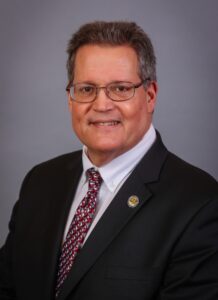
Mike Odioso is a lifelong educator and advocate for families and individuals with developmental disabilities. Since January 2025, he has represented Ohio’s 30th House District, which covers much of western Hamilton County, in the Ohio House of Representatives. A Republican, Odioso was appointed Vice Chair of the House Education Committee during his first term, a rare honor for a freshman legislator.
Raised in Cincinnati, Odioso graduated from St. Xavier High School and later earned degrees in history, law, and education from the University of Cincinnati and Mount St. Joseph University. Though trained as a lawyer, he found his calling in the classroom, spending 29 years teaching social studies at St. Xavier High School. His educational career, service on local school boards, and advocacy for school safety have made him a strong voice for reform, parental involvement, and school choice.
Odioso’s commitment to service is deeply personal. After raising a daughter with autism and significant disabilities, he co-founded the Ohio Coalition for Person-Centered Planning to improve resources for families like his. He has also served as guardian ad litem, a board member for Hamilton County Developmental Disabilities Services, and a co-sponsor of legislation expanding Ohio’s ABLE savings program for individuals with disabilities.
A former Political Director for the Hamilton County Republican Party, Odioso is a strong supporter of law enforcement, public safety, and conservative values. He lives in Green Township with his wife, Leslie. Their faith and family have long shaped his mission to serve others, particularly the most vulnerable.
Mike Odioso’s career reflects his belief that strong communities are built on safe neighborhoods, excellent schools, and compassionate, accountable leadership.